Small construction projects often require the same level of planning and precision as larger developments, despite having fewer workers, limited budgets, and tighter working spaces. Renovating a driveway, building a garden extension, preparing a small foundation, or installing underground services can involve substantial excavation. The challenge is finding machinery that provides sufficient capability without creating unnecessary disruption or logistical complications.
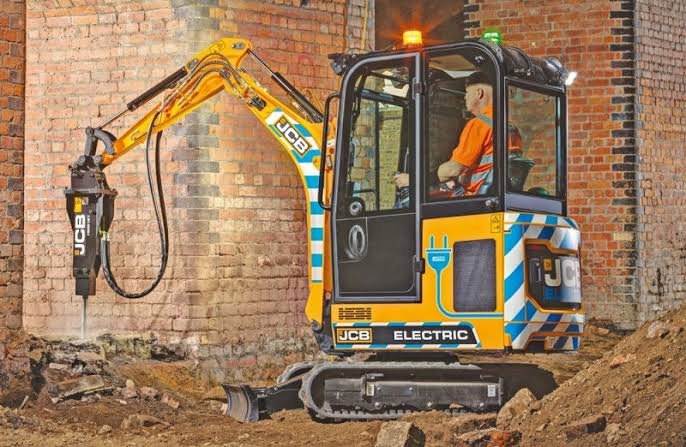
For contractors working on these projects, electric diggers may offer an alternative that fits certain site conditions more effectively. Compact battery-powered machinery can be useful where access, noise, and exhaust emissions are important considerations. Its impact on a small project, however, depends on matching machine capabilities with the actual workload and organising the operation carefully.
Making Limited Space More Manageable
Smaller construction sites frequently have physical restrictions that complicate excavation. Access may be available only through a narrow passage, an existing garage entrance, or a side area between buildings. Nearby walls, fences, trees, and established landscaping can limit manoeuvring space.
Compact equipment can help address some of these challenges. Contractors should examine the machine’s overall width, height, turning characteristics, operating footprint, and transport dimensions before bringing it to the site. The ability to enter the work area without removing substantial existing structures can simplify preparation and reduce additional costs.
Nevertheless, compact dimensions do not guarantee suitability. The machine must have enough reach, digging depth, and lifting capability to perform the planned work. A site assessment can establish whether the equipment can operate safely without obstructing pedestrian routes or damaging surrounding property.
Reducing Disruption Around Occupied Properties
Many small projects take place beside homes or within buildings that remain occupied. Renovation work may affect residents, neighbours, shop owners, or employees who continue their everyday activities while construction is underway.
Electric machinery can be attractive in these situations because it avoids diesel exhaust at the operating point and may reduce engine-related noise. This can be useful during work in residential courtyards, narrow streets, or locations where the project team needs to communicate regularly with people nearby.
Reduced noise should not be interpreted as silent operation. Hydraulic equipment, digging attachments, tracks, and soil movement continue to create sound. Contractors should plan working hours, communicate schedules, and follow applicable noise restrictions even when using electric machinery.
Improving the Organisation of Small Jobs
Smaller projects often involve several tasks completed by a limited team. One excavator may be expected to remove soil, prepare trenches, reposition materials, and assist with ground preparation. Equipment availability can influence the sequence in which these activities take place.
A carefully selected machine can help reduce unnecessary manual digging and repeated movement between work areas. Contractors should consider the attachments required for the job, the distance materials must be moved, and whether the excavator can complete different stages without frequent repositioning.
Good planning also involves defining the excavation area clearly. Marking boundaries, identifying buried utilities, and establishing safe access routes can prevent interruptions and help operators work more accurately.
Charging as Part of the Project Schedule
Battery-powered equipment requires a charging plan that reflects the project’s daily demands. Before work begins, contractors should identify available electrical supplies, confirm charger requirements, and determine how charging can be incorporated into the schedule.
For a small project with predictable tasks, charging may be possible overnight or during planned inactive periods. However, operating time can vary with soil conditions, hydraulic workload, travel, attachment use, and environmental temperature. Contractors should avoid relying solely on advertised battery figures when estimating daily productivity.
Where charging access is limited, the team may need to reconsider the work sequence or choose a different machine. Establishing a realistic energy plan helps prevent unexpected interruptions.
Financial Considerations for Small Contractors
Small businesses must pay particular attention to equipment costs because their workloads may fluctuate throughout the year. Purchasing a machine requires comparing its initial cost with expected usage, financing, maintenance, energy consumption, transport, and potential resale value.
Electric machinery may offer advantages for projects where noise restrictions, emissions requirements, or access conditions create opportunities to undertake work that would otherwise be difficult. The business case becomes stronger when the equipment can be used regularly across several suitable jobs.
Contractors should also consider whether renting, leasing, or purchasing is the most appropriate option. Comparing different ownership arrangements can help avoid investing in machinery that is underused.
Preparing for a Successful Introduction
Operators need appropriate training and clear procedures for working with battery-powered equipment. Supervisors should ensure that personnel understand machine controls, charging safety, battery warnings, attachment requirements, and site-specific hazards.
Small construction projects benefit from practical preparation. When access is checked, excavation requirements are defined, charging arrangements are confirmed, and the workforce understands its responsibilities, machinery can be integrated more effectively.
Electric diggers can transform certain small projects by offering another way to approach confined excavation and work near occupied spaces. The greatest benefits arise when their capabilities are aligned with the project rather than when technology is selected without considering operational realities.