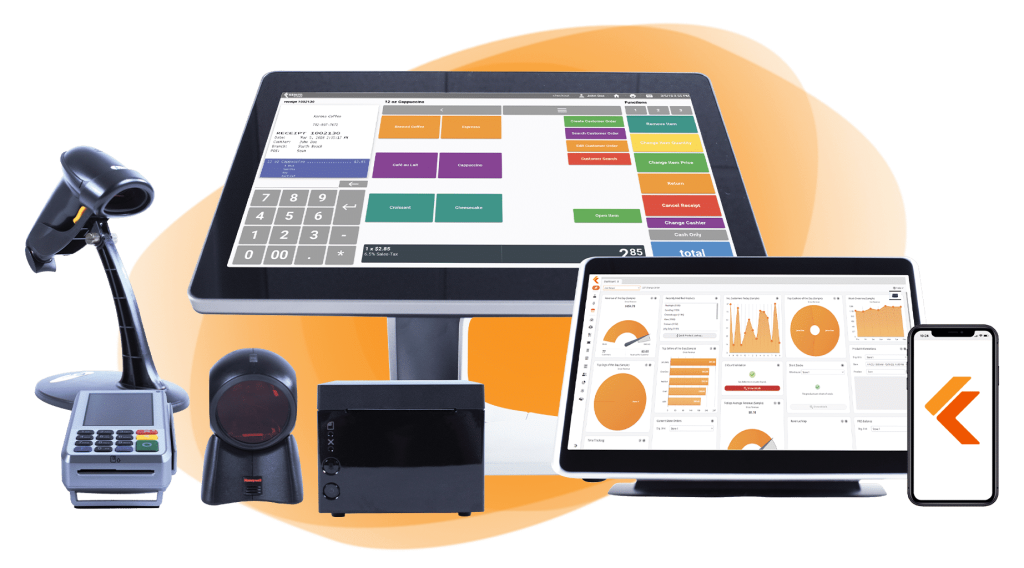
Businesses rely on cash registers to process sales, but the technology behind them has evolved significantly over the years. While traditional cash registers are still used in some stores, modern POS cash registers offer advanced features that go far beyond handling transactions. Understanding the differences between these systems can help business owners choose the right solution for their operational needs.
A traditional cash register focuses primarily on recording sales and storing cash, whereas a modern POS system integrates payment processing, inventory management, reporting, and customer data into one platform. To better understand the capabilities of a modern POS Cash Register, you can explore how these systems support efficient retail and business operations.
What Is a Traditional Cash Register?
A traditional cash register is a standalone device designed to calculate purchase totals, store cash securely, and print receipts. It performs basic transaction functions but typically requires manual inventory tracking and separate accounting processes.
These registers are simple to operate and may still be suitable for businesses with limited transaction volumes and straightforward operational requirements.
What Is a POS Cash Register?
A POS cash register combines specialized hardware with intelligent software to manage multiple aspects of a business. In addition to processing payments, it tracks inventory, generates reports, manages employee access, and supports various payment methods.
This integrated approach allows businesses to automate routine tasks while maintaining accurate operational records.
Key Differences Between the Two
Although both systems process customer purchases, their capabilities differ significantly.
| Feature | Traditional Cash Register | POS Cash Register |
|---|---|---|
| Payment Processing | Basic cash and limited card support | Multiple payment methods including digital wallets |
| Inventory Management | Manual tracking | Automatic real-time updates |
| Sales Reports | Limited or manual | Detailed analytics and reporting |
| Employee Management | Minimal | User accounts and permission controls |
| Customer Information | Not available | Purchase history and customer profiles |
| Business Insights | Very limited | Comprehensive performance data |
Transaction Efficiency
A POS cash register speeds up the checkout process by automatically retrieving product information, calculating taxes, and applying discounts. Barcode scanning further reduces manual input and improves transaction accuracy.
Traditional cash registers often require more manual entry, which can increase processing time and the likelihood of mistakes.
Inventory Control
Inventory management is one of the biggest advantages of a POS system. Every completed transaction updates stock levels instantly, allowing business owners to monitor product availability in real time.
With a traditional cash register, inventory must usually be counted and updated manually, making it more time-consuming and prone to errors.
Reporting and Business Insights
Modern POS systems generate valuable reports that help businesses monitor sales trends, product performance, and employee productivity. These reports simplify decision-making and support long-term planning.
Traditional cash registers generally provide limited reporting, requiring additional manual recordkeeping to analyze business performance.
Payment Flexibility
Consumer payment preferences continue to evolve. A POS cash register typically supports:
- Cash payments
- Credit and debit cards
- Contactless payments
- Mobile wallets
- QR code payments
Traditional cash registers may only support cash or require separate equipment for electronic payments.
Which Option Is Better?
The best choice depends on the size and needs of the business.
A traditional cash register may be sufficient for very small businesses with simple operations and low transaction volumes. However, businesses looking to improve efficiency, automate processes, and gain better visibility into their operations often benefit more from a POS cash register.
As businesses grow, the additional features of a POS system become increasingly valuable for managing daily operations and supporting future expansion.
Conclusion
Both traditional cash registers and POS cash registers serve the basic purpose of processing customer transactions, but their capabilities differ considerably. Traditional systems focus on essential sales functions, while modern POS solutions provide integrated tools for inventory management, reporting, employee oversight, and payment flexibility. Choosing the right system depends on business requirements, but for many organizations, a POS cash register offers greater efficiency, improved accuracy, and stronger support for long-term growth.