Wholesale purchasing is an important part of running a successful retail business, especially for stores that sell fashion accessories, travel essentials, and everyday lifestyle products. Neoprene bags have become an increasingly popular product category because of their lightweight construction, flexible material, modern appearance, and practical functionality. Retailers who understand the wholesale market can make better purchasing decisions and build a product range that meets customer expectations.
For retailers and business owners, exploring Neoprene Bag Wholesale opportunities can provide access to different bag styles, sizes, colors, and customization options. Buying directly from wholesale manufacturers may also help businesses manage inventory costs, maintain consistent product quality, and create collections that suit their target markets.
Understanding the Neoprene Bag Market
Neoprene is a synthetic rubber material commonly used in products that require flexibility, cushioning, and resistance to everyday moisture. Originally associated with wetsuits and protective equipment, it is now widely used in fashion accessories, including handbags, cosmetic bags, laptop sleeves, and beach bags.
Its soft texture and adaptable structure make it suitable for different product designs. Neoprene bags are also available in various thicknesses, finishes, and colors, allowing manufacturers to serve different customer preferences.
The growing interest in practical and versatile accessories has created opportunities for retailers to include neoprene products in their collections.
Why Retailers Are Choosing Neoprene Bags
Neoprene bags offer several characteristics that make them appealing in retail environments. Their combination of functionality and contemporary design helps them attract customers looking for accessories that work for everyday activities.
Some important advantages include:
- Lightweight construction: Neoprene bags are generally easy to carry, making them suitable for commuting, shopping, and travel.
- Flexible design: The material can accommodate different shapes and product structures.
- Cushioning properties: Its soft structure provides a degree of protection for everyday belongings.
- Moisture resistance: Neoprene can resist light moisture, although performance depends on construction, seams, and closures.
- Design versatility: Manufacturers can produce bags in different colors, patterns, sizes, and styles.
These qualities allow retailers to target customers with different lifestyles and purchasing preferences.
Types of Neoprene Bags Available for Wholesale
Before placing a bulk order, retailers should understand the different product categories available. Selecting the right styles helps businesses develop a balanced collection.
Neoprene Beach Bags
Beach bags are designed to carry towels, sunscreen, clothing, water bottles, and other outdoor essentials. Their lightweight construction and moisture-resistant material make them suitable for beach trips, swimming activities, and vacations.
Neoprene Tote Bags
Tote bags are versatile accessories that can be used for shopping, work, casual outings, and daily errands. Their spacious interiors and simple designs make them suitable for a broad customer base.
Neoprene Cosmetic Bags
Cosmetic bags provide convenient storage for makeup, skincare products, and personal care accessories. Their compact sizes and flexible material make them practical for everyday organization and travel.
Neoprene Laptop Bags
Laptop bags and sleeves are designed to hold electronic devices while providing cushioning against minor scratches and everyday contact. Different sizes can accommodate various laptop dimensions.
Neoprene Handbags
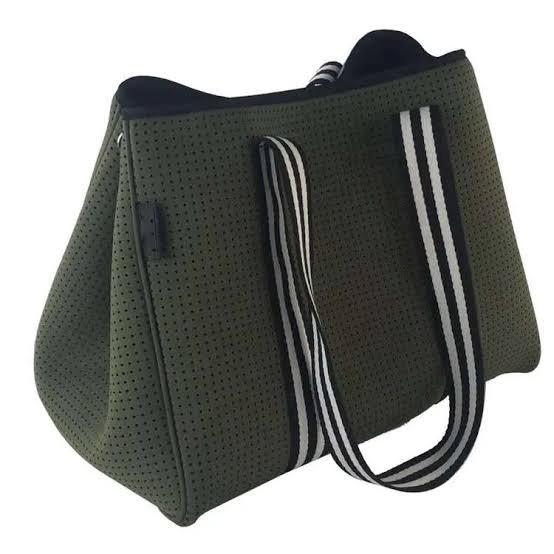
Neoprene handbags combine casual styling with practical storage. They are available in different shapes, handles, colors, and structural designs, allowing retailers to offer options for different fashion preferences.
How to Choose the Right Wholesale Supplier
Selecting a dependable supplier is one of the most important decisions when purchasing products in bulk. A suitable manufacturing partner should understand product requirements, maintain consistent quality, and communicate clearly throughout the ordering process.
Retailers should consider several factors before choosing a supplier.
Product experience: Look for manufacturers with experience producing neoprene bags and a clear understanding of material properties, construction methods, and finishing techniques.
Manufacturing capabilities: Check whether the supplier can produce different bag styles, dimensions, colors, and designs according to your requirements.
Quality control: Ask about inspection procedures, stitching standards, material consistency, zipper quality, and finishing.
Communication: Reliable communication helps prevent misunderstandings about specifications, production schedules, and order quantities.
Customer support: A supplier should provide clear information about samples, production progress, packaging, shipping, and potential product issues.
Comparing multiple suppliers can help retailers identify a manufacturing partner that matches their business requirements.
Important Factors to Consider Before Placing Bulk Orders
Wholesale purchasing requires careful planning because ordering large quantities without proper evaluation can create unnecessary inventory costs.
Minimum Order Quantity
Manufacturers often establish a minimum order quantity (MOQ) to manage production efficiency. Retailers should confirm the required quantity before requesting a quotation.
Smaller businesses may prefer suppliers that offer flexible order quantities, while established retailers may benefit from larger production runs.
Material Quality and Thickness
Neoprene bags can differ in thickness, density, elasticity, and surface finish. These characteristics influence the bag’s appearance, structure, flexibility, and durability.
Retailers should request material specifications and physical samples to evaluate whether the products meet their expectations.
Design and Customization
Customization can help retailers develop products that reflect their brand identity. Available options may include:
- Custom colors and patterns
- Printed or embroidered logos
- Different bag dimensions and shapes
- Customized handles and straps
- Zipper and closure variations
- Branded labels and packaging
However, businesses should confirm which customization options are available and whether they affect minimum order quantities or production costs.
Production and Delivery Time
Production schedules vary according to order size, design complexity, material availability, and manufacturing capacity. Retailers should discuss estimated lead times before confirming an order, particularly when preparing for seasonal sales.
Understanding Wholesale Pricing
The cost of neoprene bags depends on several manufacturing and purchasing factors. Understanding these elements makes it easier to compare quotations and calculate potential retail margins.
Important pricing factors include:
- Material specifications: Neoprene thickness, quality, and finishing can influence the overall cost.
- Product dimensions: Larger bags generally require more material and may involve additional construction work.
- Order quantity: Larger orders may reduce the cost per unit through economies of scale.
- Customization: Special printing, embroidery, accessories, and packaging can increase production expenses.
- Manufacturing complexity: Detailed designs and additional compartments may require more labor and production time.
- Shipping arrangements: Freight charges, customs duties, and other import-related expenses affect the final landed cost.
Retailers should compare the complete cost rather than focusing exclusively on the quoted unit price.
Quality Control for Wholesale Neoprene Bags
Product quality directly influences customer satisfaction, repeat purchases, and a retailer’s reputation. For this reason, quality inspection should be part of every wholesale purchasing process.
Before approving a bulk order, businesses should examine product samples for:
- Consistent neoprene thickness and texture
- Strong and even stitching
- Properly attached handles and straps
- Smooth zipper operation
- Accurate dimensions and shape
- Clean edges and finishing
- Consistent colors and printing
For larger orders, retailers can discuss pre-shipment inspections with their suppliers. Establishing clear quality standards before production reduces the possibility of receiving products that do not match the approved sample.
How to Manage Inventory and Retail Demand
Purchasing the right quantity is essential for maintaining healthy inventory levels. Ordering too many products can tie up working capital, while insufficient stock may result in missed sales opportunities.
Retailers should study customer preferences, previous sales records, seasonal demand, and product performance before deciding on order quantities.
For example, beach bags may experience stronger demand during warmer months and vacation seasons. Cosmetic bags and tote bags, on the other hand, may have more consistent demand throughout the year.
A balanced product range can help businesses reduce dependence on a single category and reach customers with different needs.
Marketing Neoprene Bags to Customers
Once wholesale products arrive, retailers need an effective strategy to introduce them to potential buyers. Clear product information and attractive presentation can help customers understand the benefits of neoprene accessories.
Online stores should include high-quality product photographs, accurate dimensions, material descriptions, available colors, and practical usage information.
Social media platforms can also help businesses demonstrate how neoprene bags fit into everyday routines. For example, retailers can share content featuring beach trips, travel organization, gym activities, and casual shopping.
In physical stores, displaying different sizes and styles together can make product comparisons easier for customers.
Common Mistakes to Avoid When Buying Wholesale
Retailers can reduce purchasing risks by avoiding several common mistakes.
Choosing suppliers based only on price: Extremely low quotations may indicate differences in material quality, construction, or service. Always compare product specifications.
Skipping sample evaluation: A digital product image may not accurately represent the actual material, dimensions, or finishing.
Ignoring additional costs: Shipping, customs charges, packaging, and inspection expenses should be included in the purchasing budget.
Ordering without market research: Buying large quantities without understanding customer demand can lead to slow-moving inventory.
Overlooking communication: Unclear agreements about specifications, delivery schedules, and quality standards can cause problems during production.
Careful preparation helps retailers establish more reliable purchasing processes and avoid unnecessary expenses.
Conclusion
Neoprene bags offer retailers and business owners an opportunity to expand their accessory collections with products that combine practical functionality, flexible designs, and contemporary styling. From beach bags and totes to cosmetic bags and laptop sleeves, the material supports a wide range of product applications.
Successful wholesale purchasing depends on choosing suitable products, evaluating suppliers, checking material quality, understanding pricing, and managing inventory effectively. By approaching each stage carefully, retailers can build a dependable supply chain and develop product collections that respond to changing customer preferences.