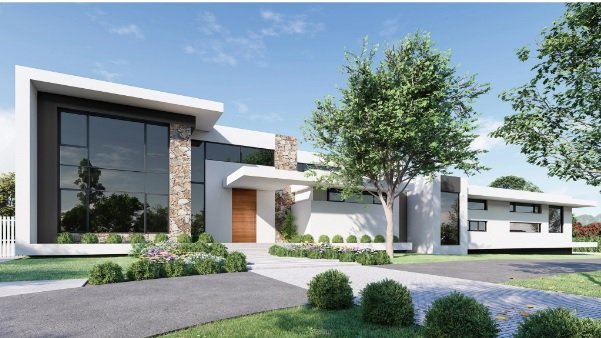
Most people meet a new building from the street. Long before a buyer gets to the front door, or a council officer opens the plans, they’ve already decided how they feel about the facade and the way it sits on the block.
That’s why the exterior images matter so much. A clear, believable render helps people get the design quickly. A flat or overcooked one leaves them guessing and sometimes expecting a building that was never going to exist.
People judge buildings by their facades first
Here’s the awkward bit. Most of the people a project needs on side will never read the drawings. Neighbours won’t. Buyers won’t. Investors might skim them, if you’re lucky.
Show them a realistic exterior render, though, and they’ve got something to react to. How tall is it? What’s it clads in? How close does it come to the footpath? Nobody asks “what will it look like?” anymore. They ask whether the cladding could be a shade darker, or whether the setback could grow by a metre. Those are questions you can actually work with.
Brisbane is hard to fake
Brisbane light is strong. For most of the year it hits pale walls and tin roofs hard and leaves sharp, dark shadows underneath the eaves. Gardens grow thick. Plenty of streets have big old jacarandas or figs out the front.
Locals notice when a render gets this wrong, even if they couldn’t tell you why. A soft grey sky behind a Queenslander, or a site with no planting at all, just looks like it came from somewhere else. Good 3D rendering Brisbane studios match the light, planting and street character to the actual site.
Slope is the other thing. A lot of Brisbane blocks fall away from the street, some of them steeply. On an elevation drawing the house looks simple. On the real site it might be a full storey up at the front and sitting on the ground at the back. Model the slope properly and people can see what they’ll get from the footpath and from next door’s yard.
Context helps get designs approved
In older suburbs, new homes usually go up between timber-and-tin houses that have been there for decades. So, the first question in most planning conversations is predictable: how does this fit in?
A render that includes the houses either side, the street trees and the footpath answers that before anyone asks. People can see whether the height feels right and whether the materials sit comfortably on the street. Put the same building on a white background and you’ve thrown that away.
Eye-level views help here more than anything. That’s how a neighbour sees it, or someone walking the dog past in the morning. An aerial can look impressive in a pitch deck, but nobody actually experiences their street from 50 metres up.
Materials must look credible
Finishes do a lot of the talking on an exterior. Timber battens, face brick, render, metal cladding and glass all look different in hard sun, in shade and after rain.
Good 3D exterior rendering services get the scale and texture of those materials right. Timber should have grain and a bit of colour variation. Brick needs mortar joints that are the right width. Glass should pick up reflections from the sky and trees, without turning into a perfect mirror.
If the materials look real, clients sign off on the palette with a lot more confidence. And you avoid the awful moment when the cladding goes up and someone says, “That’s not what the picture showed.”
Realistic graphics sell better
For developers, the exterior shot often does most of the selling. It goes on the site hoarding, the brochure, the website and every listing, usually months before construction starts.
Buyers have become good at spotting renders that try too hard. Glowing orange skies and gardens nobody will ever plant can make a project feel less trustworthy. A realistic image of a well-designed building tends to work better, because people can imagine living in it.
It protects the developer too. When the finished building matches the marketing, handover is a lot calmer.
What makes an exterior render work?
It mostly comes down to a handful of basics. The dimensions and details should match the architectural drawings, and the materials should match what’s been specified. The sun needs to come from the right direction for that site. Cameras should sit roughly where a person would stand. The real neighbours belong in the background, and the landscaping should be what’s actually going to be planted.
None of that is difficult. Skip one, though, and people start to sense something’s off.
A depiction of the building as it would be
In a city with light and streets as distinctive as Brisbane’s, a render that ignores the setting is easy to spot. One that gets it right does a lot of quiet work. Clients decide faster, assessors understand what they’re looking at, and buyers can picture the place before it’s built.