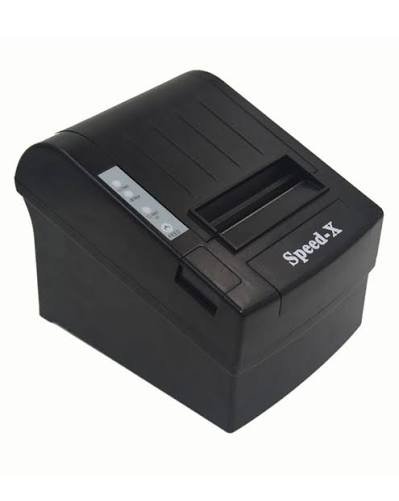
Thermal printers are widely used in retail, logistics, healthcare, transportation, and industrial operations. Their ability to produce receipts, labels, and barcodes quickly makes them important tools for businesses that depend on accurate printed information. However, manufacturing reliable thermal printing equipment involves several technical and operational challenges that can affect product quality, production efficiency, and delivery schedules.
From selecting suitable components to maintaining consistent printing performance, manufacturers must manage multiple factors throughout the production process. A professional Thermal Printer Manufacturer needs effective engineering, quality control, supplier management, and production planning to address these challenges. Understanding the common difficulties involved in manufacturing helps buyers evaluate product reliability and manufacturing capabilities more effectively.
1. Maintaining Consistent Print Quality
Print quality is one of the most important performance requirements for thermal printers. Customers expect clear text, readable barcodes, and consistent images across different printing jobs.
However, variations in printhead performance, media quality, temperature control, and mechanical alignment can affect the final output.
Manufacturers address this challenge by carefully selecting printheads and calibrating printing systems. They also conduct tests using compatible thermal paper, labels, and other approved media.
Quality checks may examine:
- Text sharpness and readability.
- Barcode accuracy.
- Print density and uniformity.
- Alignment and spacing.
- Performance at different printing speeds.
Regular testing helps identify inconsistencies before finished products are approved for shipment.
2. Selecting Reliable Electronic Components
Thermal printers depend on several electronic components, including control boards, processors, sensors, power supplies, and communication modules.
If one component does not meet the required specifications, it may affect the operation of the entire device. Component shortages can also create production difficulties, especially when manufacturers depend on specialized parts.
To address these issues, manufacturers evaluate suppliers according to component quality, technical documentation, delivery reliability, and production consistency.
They may also qualify alternative suppliers for critical parts. However, replacement components must undergo compatibility checks before being introduced into production.
This approach helps reduce supply risks without compromising the printer’s original specifications.
3. Managing Printhead Heat and Durability
Thermal printing depends on controlled heat generation. The printhead must reach suitable temperatures to create images while avoiding excessive thermal stress.
Repeated heating cycles can contribute to wear, particularly when printers operate at high volumes or use unsuitable printing materials.
Manufacturers address this challenge through appropriate printhead selection, thermal management, and firmware control.
They may also evaluate the printer’s performance under different workloads to understand how heat affects printing consistency.
Users also influence printhead lifespan through media selection and maintenance. Using compatible thermal paper and cleaning the printhead according to product instructions can help reduce unnecessary wear.
4. Preventing Paper Jams and Feeding Errors
Paper-feeding problems are common operational issues in thermal printers. Incorrect paper alignment, unsuitable roll dimensions, damaged rollers, and debris inside the paper path can interrupt printing.
These problems may result in wasted labels, incomplete receipts, and reduced productivity.
Manufacturers work to prevent feeding errors through precise mechanical design and careful component assembly.
Important measures include:
- Designing suitable paper paths.
- Selecting rollers with appropriate friction properties.
- Maintaining accurate mechanical alignment.
- Testing different supported media sizes.
- Verifying paper guides and loading mechanisms.
Clear paper-loading instructions also help users avoid errors caused by incorrect installation.
5. Ensuring Compatibility Between Hardware and Firmware
Thermal printers combine mechanical, electronic, and software systems. These elements must operate together correctly to deliver reliable printing performance.
For example, the firmware must communicate effectively with the control board, sensors, printhead, and motor system. Incompatible software configurations can cause communication failures, incorrect printing commands, or unexpected device behavior.
Manufacturers address these challenges through coordinated hardware and firmware development.
Testing may include checking supported printing commands, communication protocols, driver compatibility, and device behavior under different operating conditions.
When a printer is designed for specialized business software, integration testing becomes particularly important.
6. Supporting Different Connectivity Requirements
Modern thermal printers are expected to connect with a variety of devices and systems. Some customers require direct USB connections, while others prefer Ethernet, Bluetooth, or Wi-Fi.
Supporting multiple interfaces increases product flexibility but also introduces additional engineering and testing requirements.
Manufacturers must ensure that communication modules are compatible with the printer’s electronic architecture and firmware.
They also need to evaluate connection stability, data transmission, and compatibility with supported operating systems.
Clear technical documentation can help distributors and end users configure devices correctly and reduce installation-related support requests.
7. Controlling Manufacturing Costs
Manufacturing costs are influenced by raw materials, electronic components, labor, equipment maintenance, packaging, and quality inspection.
Fluctuations in component prices or transportation expenses can make cost planning difficult. At the same time, reducing expenses too aggressively may affect product reliability.
Manufacturers address this challenge by reviewing production processes and identifying areas where efficiency can improve without lowering quality standards.
Possible measures include:
- Improving material utilization.
- Reducing unnecessary assembly steps.
- Standardizing suitable components.
- Optimizing inventory management.
- Monitoring production waste.
- Improving equipment maintenance.
The goal is to achieve a practical balance between manufacturing costs, product performance, and long-term reliability.
8. Managing Component Supply Chain Disruptions
Thermal printer production depends on a network of suppliers providing printheads, circuit boards, motors, sensors, plastic materials, and other components.
Delays or shortages can interrupt manufacturing schedules and affect delivery commitments.
Manufacturers reduce these risks by monitoring supplier performance and planning material requirements more carefully.
They may maintain safety stocks for critical components, work with multiple qualified suppliers, and forecast demand based on order patterns.
It is also important to evaluate alternative parts before using them. A substitute must meet the required electrical, mechanical, and performance specifications.
Effective supply chain management helps maintain production continuity during periods of market uncertainty.
9. Maintaining Consistent Product Quality in Large Orders
Producing a small batch of printers and manufacturing thousands of units involve different levels of operational complexity.
As production volume increases, manufacturers must ensure that every unit follows the approved design and specifications.
Differences in assembly procedures, component batches, or inspection practices can create variations between finished products.
Manufacturers address this challenge through standardized production instructions and structured quality management systems.
These may include:
- Incoming inspection of materials.
- Assembly process monitoring.
- In-process functional checks.
- Final printing performance tests.
- Packaging and labeling verification.
Production records can also help manufacturers identify recurring problems and trace defects to specific components or manufacturing stages.
10. Meeting International Compliance Requirements
Thermal printers sold in international markets may need to meet different regulatory and technical requirements.
These can relate to electrical safety, electromagnetic compatibility, wireless communication, environmental restrictions, and product labeling.
The challenge is that requirements may differ according to the destination country and printer configuration.
Manufacturers address this issue by identifying applicable standards early in product development and arranging appropriate testing and documentation.
Buyers should request relevant certificates and test reports for the specific models they intend to import.
They should also verify local import requirements rather than assuming that compliance in one market automatically guarantees acceptance in another.
11. Developing Customized Printer Models
Many distributors and business customers request customized thermal printers that reflect their brand identity or meet specialized operating requirements.
Customization may involve logos, housing colors, packaging, hardware configurations, or firmware changes.
However, modifications can increase design complexity and create additional testing requirements.
Manufacturers manage these challenges by reviewing customer specifications before production begins. They may prepare prototypes, assess component compatibility, and confirm design details through an approval process.
For customized orders, it is important to establish clear requirements covering:
- Branding and logo placement.
- Product dimensions and appearance.
- Supported printing functions.
- Connectivity specifications.
- Packaging design.
- Quality acceptance criteria.
A documented approval process reduces the risk of producing equipment that does not match the customer’s expectations.
12. Improving Production Efficiency
Manufacturers must coordinate procurement, assembly, inspection, packaging, and shipment preparation. Inefficient workflows can increase production time and create unnecessary expenses.
For example, poor material organization may delay assembly, while repeated inspection failures can require additional labor and rework.
Manufacturers can improve efficiency through better production planning and process monitoring.
Useful approaches include:
- Organizing workstations logically.
- Standardizing assembly procedures.
- Training production employees.
- Maintaining manufacturing equipment.
- Monitoring production bottlenecks.
- Using suitable automation where practical.
Regular performance reviews help identify areas where workflow improvements can produce measurable benefits.
13. Reducing Mechanical Wear and Product Failures
Mechanical components such as rollers, gears, motors, hinges, and paper guides experience repeated movement during printer operation.
Poor material selection or inaccurate assembly can lead to excessive friction, noise, misalignment, and premature wear.
Manufacturers address these problems by evaluating material properties and testing mechanical components under repeated operating cycles.
They may also review gear precision, roller hardness, motor performance, and assembly tolerances.
The design should match the expected workload. A printer intended for frequent commercial use may require different mechanical specifications from a model designed for occasional printing.
14. Managing Product Testing and Inspection Time
Thorough testing is necessary, but inspection procedures must also fit within production schedules.
If testing takes too long, shipment dates may be affected. If inspection is too limited, defects may reach customers.
Manufacturers address this challenge by developing inspection procedures based on product risks and performance requirements.
For example, functional tests may check printing, paper feeding, and connectivity, while additional inspections may focus on components or features that have shown recurring problems.
A structured testing plan helps maintain quality without introducing unnecessary delays.
15. Providing Reliable After-Sales Support
Manufacturing responsibilities do not end when products leave the factory. Distributors and end users may later need assistance with setup, troubleshooting, repairs, or replacement parts.
Poor after-sales support can damage customer relationships even when the original products meet their specifications.
Manufacturers can improve support by providing:
- Clear user manuals.
- Technical troubleshooting guides.
- Firmware and driver resources.
- Warranty procedures.
- Spare parts availability.
- Communication channels for technical inquiries.
They should also define how warranty claims are reviewed and how replacement products or components are supplied.
A reliable support process helps distributors manage customer expectations and maintain confidence in the equipment.
16. Adapting to Changing Market Expectations
Thermal printing technology continues to develop as businesses adopt mobile systems, automated workflows, and connected devices.
Customers increasingly expect printers to integrate smoothly with their existing technology while remaining efficient and easy to maintain.
Manufacturers must monitor changing requirements and evaluate whether their product designs need updates.
Areas receiving attention include:
- Wireless communication.
- Compact printer designs.
- Improved energy efficiency.
- Better printing accuracy.
- Enhanced device compatibility.
- More durable components.
- Simplified maintenance.
Research and development can help manufacturers identify useful improvements while ensuring that new features remain practical for their target applications.
17. Training Employees and Maintaining Technical Expertise
Thermal printer manufacturing requires knowledge of electronics, mechanical engineering, firmware, assembly, and quality assurance.
A lack of technical training can lead to assembly errors, inconsistent inspections, and difficulties troubleshooting production problems.
Manufacturers can address this challenge through regular employee training and documented work procedures.
Training should cover component handling, assembly standards, equipment operation, inspection methods, and workplace safety.
Technical teams should also stay informed about new components and manufacturing methods so they can respond to changing product requirements.
Conclusion
Thermal printer manufacturing involves several interconnected challenges, including print quality, component sourcing, heat management, mechanical reliability, software compatibility, production efficiency, and international compliance. Each issue requires careful planning and coordinated solutions across engineering, procurement, assembly, and quality management.
Manufacturers can address these difficulties through reliable suppliers, standardized production procedures, comprehensive testing, effective inventory planning, and ongoing technical development. For buyers, understanding these challenges provides a useful basis for evaluating manufacturing capabilities and selecting equipment that meets their operational requirements. A manufacturer that manages these areas effectively is better positioned to deliver consistent products and support long-term business relationships.