Packaging is an important part of running a successful restaurant or takeaway business. While food quality and customer service often receive the most attention, the packaging used to deliver meals also influences customer satisfaction, food presentation, and operational efficiency. Restaurants need containers that can protect different food items while making transportation and handling convenient.
Investing in high-quality Fast Food Boxes can help food businesses maintain consistent packaging standards and improve the takeaway experience. From protecting meals during delivery to supporting brand recognition, well-designed food boxes offer several practical advantages that contribute to the overall performance of a food service operation.
1. Better Protection for Food Products
One of the primary benefits of high-quality food packaging is improved product protection. Meals often pass through several handling stages before reaching customers, including preparation, packing, storage, and transportation.
Strong and properly designed boxes help prevent food from being crushed, spilled, or exposed to external contaminants. This is particularly important for burgers, sandwiches, fried chicken, and other meals that need to maintain their original appearance.
Durable packaging also reduces the possibility of containers opening accidentally during delivery, helping restaurants provide a more reliable service.
2. Maintaining Food Freshness and Quality
Food quality can change during transportation because of temperature, moisture, and exposure to air. Suitable packaging helps manage these conditions and preserve the expected eating experience.
For example, grease-resistant materials can prevent oils from passing through the packaging, while appropriately designed ventilation helps release excess steam from hot and crispy foods.
Different meals require different packaging properties. Restaurants should select containers based on the temperature, moisture level, and physical characteristics of their menu items.
3. Improving Customer Satisfaction
Customers evaluate their takeaway experience through more than taste alone. Packaging condition, convenience, cleanliness, and food presentation also influence their overall impression.
High-quality boxes help create a positive experience by making meals easier to carry, open, and consume. Secure closures and suitable dimensions also reduce the likelihood of spills and messy packaging.
When customers consistently receive their orders in good condition, they are more likely to develop trust in the restaurant and consider ordering again.
4. Supporting Restaurant Branding and Recognition
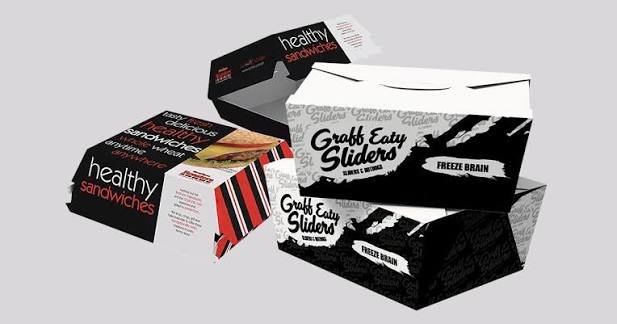
Food packaging provides an additional opportunity for restaurants to communicate their brand identity. Custom-printed boxes can display business names, logos, brand colors, and other visual elements.
Unlike disposable packaging without identifying features, branded containers help customers recognize a business when receiving or sharing takeaway meals.
Some effective branding elements include:
- Clearly displayed restaurant logos.
- Consistent brand colors and typography.
- Simple and recognizable graphic designs.
- Relevant product or promotional information.
- Website addresses or social media details.
Professional packaging can help create a consistent visual identity across dine-in takeaway orders, delivery services, and catering operations.
5. Increasing Operational Efficiency
Restaurants often manage large numbers of orders during busy lunch and dinner periods. Packaging that is easy to assemble, fill, close, and store can simplify daily operations.
Standardized box sizes allow employees to identify suitable containers quickly. This reduces unnecessary handling and helps maintain an organized food preparation area.
Stackable packaging can also improve storage efficiency by making better use of available space. When packaging is designed for quick assembly, employees can prepare orders more consistently during peak business hours.
6. Reducing Food Leakage and Packaging Waste
Poor-quality packaging can lead to damaged containers, grease stains, and food leakage. These problems may result in customer complaints, replacement orders, and unnecessary material consumption.
High-quality packaging is generally designed with stronger structures, suitable closures, and materials selected for specific food applications.
For restaurants serving oily or moisture-rich meals, grease-resistant and moisture-resistant packaging can provide additional protection.
Although better packaging may have a higher initial purchasing cost, its performance can help reduce avoidable losses associated with damaged meals and packaging failures.
7. Providing Convenience for Takeaway and Delivery
Convenience is one of the main reasons customers choose takeaway services. Packaging should make it easy to transport meals without creating unnecessary difficulties.
Well-designed food containers offer practical features such as:
- Secure lids that help prevent accidental opening.
- Comfortable shapes for carrying and handling.
- Appropriate compartments for different food items.
- Lightweight structures that simplify transportation.
- Stackable designs for organized order preparation.
These features are particularly useful for restaurants working with delivery platforms, food couriers, and customers collecting orders directly.
8. Supporting Different Menu Requirements
Restaurants frequently serve different types of food, and each product may require a specific packaging design.
High-quality packaging is available in different shapes, capacities, and structural styles to accommodate a wide range of menu items.
For example, burger boxes provide enough space to hold assembled burgers, while fry containers offer convenient access to smaller snacks. Compartmentalized meal boxes are useful for dishes containing several ingredients that should remain separate.
Having suitable packaging for each menu category helps restaurants maintain food presentation and avoid using inappropriate containers.
9. Improving Storage and Inventory Management
Packaging quality also affects how restaurants organize their supplies. Consistent dimensions and standardized designs make it easier to stack and store containers.
When businesses select packaging that fits their operational requirements, they can organize inventory more effectively and reduce unnecessary storage space.
Ordering packaging in appropriate quantities also helps maintain a consistent supply without creating excessive inventory.
Restaurants should consider factors such as storage capacity, delivery schedules, packaging consumption, and seasonal demand when planning purchases.
10. Supporting Environmentally Responsible Packaging Choices
Environmental responsibility has become an important consideration for modern food businesses. Many restaurants are exploring packaging materials and designs that can help reduce environmental impact.
Paperboard, kraft paper, and other fiber-based materials are commonly used in food packaging. Depending on their coatings, additives, and local waste management facilities, some options may be recyclable or compostable.
Businesses can consider several approaches:
- Choosing packaging with efficient material usage.
- Selecting recyclable materials where suitable facilities exist.
- Evaluating packaging made with recycled content when food safety requirements allow.
- Avoiding unnecessarily large containers.
- Considering compostable options where appropriate composting infrastructure is available.
It is important to evaluate the complete lifecycle of packaging rather than relying only on environmental labels or material descriptions.
11. Creating a Professional Food Presentation
Presentation plays an important role in how customers perceive a restaurant. Even when meals are prepared carefully, unsuitable packaging can make them appear disorganized or less appealing.
High-quality boxes help maintain the arrangement of food items and provide a cleaner presentation. Properly fitted containers can prevent burgers from shifting, sandwiches from becoming crushed, and side dishes from spilling.
For restaurants offering premium takeaway meals, packaging quality can also support the overall positioning of their products.
12. Offering Better Long-Term Business Value
The cost of packaging should be evaluated in relation to its performance and contribution to business operations.
Choosing the cheapest available container may appear economical initially, but weak materials and unreliable closures can create additional expenses.
High-quality packaging can provide better long-term value through improved durability, fewer damaged orders, more efficient handling, and consistent customer experiences.
Restaurants should compare the following factors when evaluating packaging options:
- Unit purchasing cost.
- Material strength and durability.
- Food protection capabilities.
- Storage and transportation efficiency.
- Customization possibilities.
- Minimum order quantities.
- Supplier reliability and delivery consistency.
Considering these factors helps businesses make purchasing decisions based on overall value rather than price alone.
How Restaurants Can Choose the Right Food Boxes
Selecting appropriate packaging requires an understanding of menu requirements and daily operating conditions.
Restaurants should begin by identifying the types of meals they serve and the conditions under which those meals will be transported. Packaging for hot fried foods may require different ventilation and grease-resistance properties than containers used for cold sandwiches.
It is also important to test packaging samples before placing large orders. Restaurants can evaluate container strength, closure performance, food compatibility, and ease of handling using their actual menu items.
Working with an experienced packaging supplier can also help businesses understand available materials, customization options, and production requirements. Clear communication about order quantities, specifications, and delivery schedules makes the purchasing process more manageable.
Future Developments in Restaurant Food Packaging
The food packaging industry continues to evolve in response to changing consumer expectations and technological improvements.
Manufacturers are exploring more efficient material structures, improved grease-resistant treatments, and packaging designs that balance durability with reduced material consumption.
Customization is also becoming increasingly important as restaurants seek packaging that reflects their brand identity while meeting practical food protection requirements.
In addition, improvements in packaging design are helping businesses develop containers that are easier to assemble, store, transport, and dispose of responsibly.
These developments are expected to influence how restaurants select packaging solutions in the coming years.
Conclusion
High-quality food packaging offers significant benefits for restaurants and takeaway businesses. It helps protect meals, maintain food quality, improve customer satisfaction, support branding, and simplify daily operations.
Choosing suitable packaging also contributes to better inventory management, more efficient delivery processes, and reduced packaging-related problems. By considering material quality, structural strength, food compatibility, and environmental requirements, restaurants can identify solutions that meet their operational needs.
Packaging companies such as Uchampak contribute to this industry by providing options for different food service applications. Ultimately, investing in reliable packaging is a practical way for restaurants to strengthen their takeaway services and deliver a more consistent customer experience.