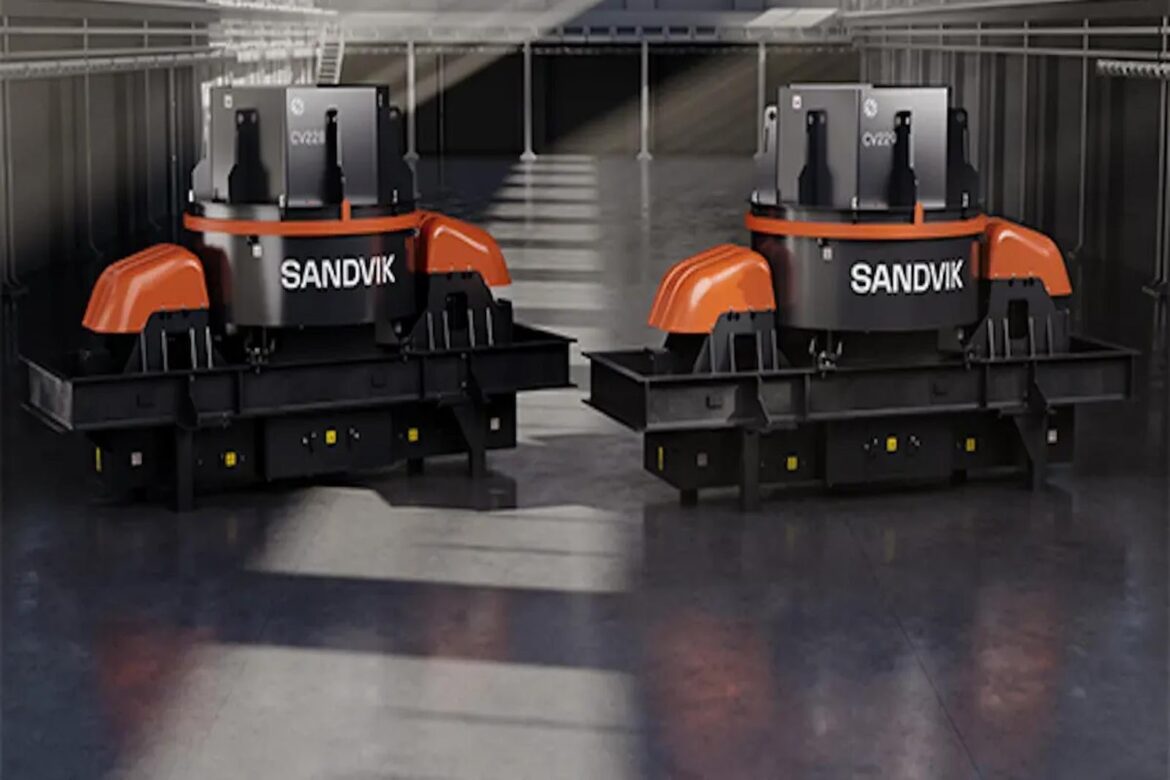
Jaw crushers and VSI crushers play very different roles in mining and construction. Understanding how each machine works, where it fits in the crushing process, and what kind of output it delivers helps operators improve efficiency, control costs, and achieve consistent material quality across projects.
Crushing equipment forms the backbone of material processing in mining and construction. The choice of crusher directly affects productivity, operating costs, and the quality of the final material. Among the most discussed options are jaw crushers and VSI Crushers, each designed for a specific purpose within a crushing circuit. While both reduce rock and mineral sizes, they do so using entirely different principles. These differences influence where they are used, how they perform, and the type of output they produce. This article explains those differences clearly, helping decision-makers choose the right equipment for each stage of material processing.
Impact vs Compression: Two Very Different Paths to Size Reduction
The most fundamental difference between jaw crushers and impact-based crushers lies in how material is broken down.
Jaw crushers rely on compression. Material is fed between a fixed jaw and a moving jaw, where pressure is applied until the rock fractures. This approach is highly effective for breaking down large, hard materials into smaller, manageable pieces.
Impact-based systems work differently. Instead of squeezing material, they use velocity and collision. Material is accelerated and then forced to break apart on impact, following natural fracture lines rather than being crushed between surfaces.
Where Crushing Begins: The Role of Primary Reduction
Jaw crushers are almost always positioned at the start of the crushing process.
They are built to handle large feed sizes directly from mining or quarrying operations. Their strength and simple mechanical design allow them to operate continuously under heavy loads.
Key characteristics of jaw crushers at the primary stage include:
- Ability to process large and abrasive materials
- Stable performance under high pressure
- Consistent reduction for downstream equipment
At this stage, the goal is size reduction, not material refinement. The output is prepared for further processing rather than final use.
From Rough Breakage to Precision Shaping
Once material has passed through primary crushing, refinement becomes the priority.
This is where VSI Crushers are commonly introduced. They are designed to work with smaller, pre-crushed material rather than raw feed. By accelerating material and directing it against a crushing chamber or rock bed, they create controlled fragmentation.
This method focuses on shaping rather than force. It transforms irregular fragments into more uniform particles, making the material suitable for applications that demand consistency and quality.
Why Material Shape Matters More Than Size Alone
In many construction and mining applications, size alone is not enough. Shape and surface texture play a major role in material performance.
Jaw crushers tend to produce angular and uneven particles. While this is acceptable for many base applications, it may not meet stricter specifications.
Impact-based crushers deliver a more cubical product with improved surface characteristics. This uniformity supports better compaction, bonding, and overall performance in construction-related uses.
For operations focused on quality rather than volume alone, particle shape becomes a deciding factor.
Energy Use, Efficiency, and Operational Trade-Offs
Energy efficiency must be assessed in relation to function.
Jaw crushers are efficient at reducing large volumes of material using steady mechanical force. Their energy consumption is predictable and well suited to primary crushing tasks.
Impact-based crushers typically require more energy per tonne. However, this energy is directed toward refining material rather than simple size reduction. When material quality is critical, this trade-off often delivers better long-term value.
Efficiency, therefore, should be measured by output suitability, not energy use in isolation.
Wear Behaviour and Maintenance Planning
Wear patterns differ significantly between the two crusher types.
Jaw crushers experience wear mainly on jaw plates. These components are designed for durability and can be replaced as part of scheduled maintenance, making wear predictable and manageable.
Impact-based crushers operate at higher speeds, which exposes wear parts to continuous impact forces. Modern designs address this with balanced rotors and replaceable wear components, helping maintain uptime and operational stability.
Effective maintenance planning depends on understanding these wear dynamics and aligning them with production demands.
Control, Consistency, and Output Predictability
Process control is increasingly important in modern crushing operations.
Jaw crushers offer limited adjustment options. Output size is primarily controlled by jaw settings, which is sufficient for primary reduction but less flexible for fine-tuning.
Impact-based systems provide greater control. Operators can adjust rotor speed and feed configuration to influence particle size and shape. This adaptability allows operations to respond quickly to changing requirements without major equipment changes.
Consistent output improves downstream efficiency and reduces reprocessing.
Choosing the Right Crusher for Each Processing Stage
Jaw crushers and VSI Crushers are not competitors but complementary machines.
Jaw crushers deliver strength and reliability at the beginning of the process. Impact-based crushers refine and shape material at later stages to meet precise specifications.
The most effective crushing circuits use each machine where it performs best. Aligning crusher selection with material characteristics, production goals, and quality requirements ensures efficient operation and consistent results across mining and construction projects.
Conclusion
Jaw crushers and VSI Crushers fulfil clearly defined roles within mining and construction workflows. Jaw crushers are built for primary crushing, handling large feed sizes and delivering reliable size reduction under demanding conditions. Their value lies in strength, durability, and consistent performance at the start of the process. VSI crushers, by contrast, focus on refinement. Using impact rather than compression, they improve particle shape and surface quality, making material suitable for applications where precision matters. The difference between the two is not about superiority but suitability. Successful operations understand where each crusher fits and how they work together. When properly integrated into a crushing circuit, these machines support both productivity and material quality while maintaining control over operating costs.