Choosing CNC equipment requires more than comparing prices and machine dimensions. Manufacturers need to evaluate how each machine handles precision, production speed, tooling, material requirements, and complex machining operations.
When reviewing a swiss CNC lathe for sale, compare features against your actual production needs. A machine that offers the right combination of axes, spindle performance, tooling capacity, and automation can support consistent results across demanding small-part applications.
Compare The Number Of Machining Axes
The number of axes should match the complexity of the components you manufacture. More machining axes can allow a machine to perform multiple operations within a single setup.
This capability becomes useful when parts require turning, drilling, milling, threading, grooving, or other detailed operations. Reducing the number of setups can also limit handling time and improve consistency.
However, manufacturers should avoid paying for unnecessary capabilities. The ideal axis configuration depends on the geometry and machining processes involved in your parts.
Examine Spindle Speed And Stability
Spindle performance directly affects machining efficiency and cutting quality. Small precision components often benefit from high-speed spindle operation, especially when working with smaller diameters.
Compare spindle speed, torque, stability, and the machine’s suitability for your regular materials. A high maximum speed alone does not guarantee better production results.
Stable spindle operation helps maintain consistent cutting conditions and supports reliable dimensional control during extended production runs.
Review Machine Accuracy And Repeatability
Precision parts demand dependable dimensional performance. Accuracy indicates how closely the machine follows programmed movements, while repeatability concerns its ability to reproduce those movements consistently.
Ask manufacturers for relevant accuracy and repeatability specifications. You should also consider machine construction, guide systems, thermal stability, and overall rigidity.
These characteristics matter when producing batches of components that must remain within tight dimensional limits.
Check Tool Capacity And Flexibility
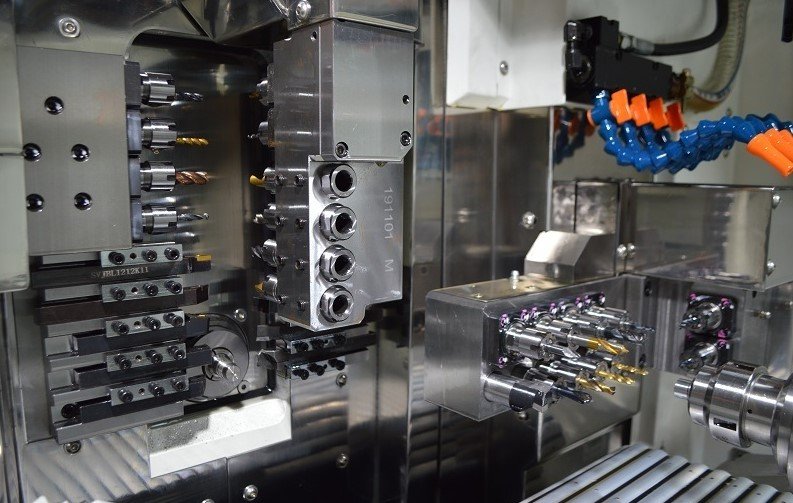
Tool capacity influences how many machining operations you can complete without stopping for manual changes. Complex components often require several turning and cutting tools.
When comparing machines, check whether the available tooling supports your current applications and potential future requirements.
Useful considerations include:
- Number of available tool positions
- Live tooling capabilities
- Tool change efficiency
- Supported tool types
- Accessibility during setup
- Compatibility with your existing tooling
A flexible tooling system can make the machine more useful across different production jobs.
Consider Bar Capacity
Swiss-type CNC machines commonly process bar stock, so bar capacity deserves careful attention. The machine should accommodate the diameters used in your regular production work.
Compare the supported material range with your current and expected part requirements. A machine with an unsuitable bar capacity could limit the components you can manufacture efficiently.
Material feeding equipment also matters for longer production runs because reliable feeding helps reduce unnecessary interruptions.
Evaluate Automation Features
Automation can have a major impact on production efficiency. Features such as automatic bar feeding can reduce the need for frequent manual material loading.
Manufacturers with high-volume production requirements should consider how much operator intervention the machine requires. Reduced intervention may allow personnel to monitor multiple processes or focus on inspection and other production tasks.
The right level of automation depends on production volume, labor availability, component design, and operating schedules.
Look At CNC Control Capabilities
The control system affects programming, setup, operation, and production management. Manufacturers should choose controls that operators can use efficiently and that integrate well with their existing workflows.
Consider programming functions, user interface design, data transfer, diagnostic features, and compatibility with relevant CAD/CAM systems.
A practical control system can reduce setup complexity, particularly when production involves multiple component designs.
Assess Chip Evacuation
Small-part machining can generate chips that interfere with tools and workpieces. Long or poorly managed chips may interrupt production and require additional operator attention.
Review the machine’s chip evacuation design and coolant delivery capabilities. Effective chip management supports cleaner machining conditions and more consistent production.
This feature becomes particularly important when machining materials that produce long or difficult-to-control chips.
Compare Coolant And Lubrication Systems
Cutting fluids help manage heat, improve tool performance, and support surface quality. Manufacturers should examine how effectively the machine delivers coolant to the cutting area.
Also review lubrication systems and maintenance requirements. Consistent lubrication helps protect moving components and supports reliable machine operation.
The coolant and lubrication setup should suit the materials, tooling, and cutting conditions used in your production environment.
Consider Machine Rigidity
Machine rigidity plays an important role in precision machining. A rigid structure helps resist vibration and unwanted movement during cutting.
This becomes especially important when machining harder materials or performing demanding operations on small components.
Look beyond exterior dimensions when comparing machines. Construction quality, component design, guide systems, and overall mechanical stability can influence long-term machining performance.
Review Maintenance And Service Requirements
A machine’s purchase price provides only part of the overall ownership picture. Maintenance requirements, spare parts, technical support, and service availability can affect long-term operating costs.
Before choosing equipment, ask about:
- Routine maintenance intervals
- Spare parts availability
- Technical support
- Installation assistance
- Operator training
- Warranty coverage
Reliable support can help manufacturers minimize downtime and maintain consistent production.
Compare Energy And Operating Costs
Two machines with similar machining capabilities may have different operating costs. Energy consumption, tooling requirements, maintenance, coolant use, and labor requirements all contribute to the total cost of ownership.
Estimate these expenses based on your expected operating schedule. A machine with a higher initial price may offer stronger long-term value when it delivers better productivity and lower operating requirements.
Think About Future Production Needs
Manufacturing requirements can change as order volumes increase or new products enter production. Choosing equipment with some additional capability may provide greater flexibility over time.
Consider potential changes in part sizes, materials, production volumes, and machining complexity.
JSWAY provides CNC machining solutions for precision manufacturing applications. Reviewing its equipment specifications alongside your current and future production requirements can help you determine whether a particular configuration fits your operation.
Compare Features As A Complete Package
Manufacturers should avoid choosing a machine based on one impressive specification. Spindle speed, axis count, tool capacity, accuracy, automation, rigidity, and control features all contribute to practical production performance.
Create a comparison based on the components you actually manufacture. This approach makes it easier to identify which features provide genuine value rather than simply increasing the machine’s specification list.
Make The Selection Based On Your Production Goals
The right Swiss CNC machine should support the part sizes, tolerances, materials, production volumes, and machining processes that define your operation.
By comparing the machine’s axes, spindle, tooling, bar capacity, automation, controls, rigidity, chip management, and service requirements, manufacturers can make a more informed purchasing decision.
JSWAY equipment can provide an option for manufacturers seeking precision-focused Swiss-type CNC machining capabilities. A careful feature comparison ensures the selected machine supports both current production demands and reasonable future growth.