Commercial water disinfection requires carefully selected chemicals, consistent treatment procedures, and regular quality monitoring. Municipal service providers, industrial facilities, swimming pool operators, and sanitation companies all depend on reliable disinfection products to manage microbial contamination. Choosing the right formulation involves evaluating chemical performance, physical characteristics, handling requirements, and compatibility with the intended treatment system.
Trichloroisocyanuric acid (TCCA) is a chlorine-based disinfectant available in several physical forms, including tablets, powder, and granules. Commercial buyers considering TCCA 90 Granules should compare available chlorine content, particle-size consistency, purity, dissolution behavior, packaging, and batch documentation. Although TCCA 90 generally refers to a grade with approximately 90% available chlorine, the exact specification should always be verified through the manufacturer’s technical documentation and Certificate of Analysis.
1. Understanding TCCA 90 Granules
TCCA is an organic chlorine compound that releases available chlorine when it dissolves in water. Its oxidizing properties make it useful in selected disinfection and sanitation applications.
The term TCCA 90 generally describes a commercial grade with an available chlorine content close to 90%, depending on the manufacturer’s specification and testing method.
Granular TCCA consists of small solid particles designed for convenient handling and use in compatible treatment procedures. Compared with tablets, granules offer a different dissolution profile and may be more suitable for certain chemical preparation or dosing arrangements.
Important product characteristics include:
- Available chlorine content
- Chemical purity and impurity levels
- Particle-size distribution
- Moisture content
- Dissolution behavior
- Packaging and storage stability
These characteristics should be assessed together rather than treating available chlorine as the only measure of product quality.
2. Why Commercial Buyers Compare TCCA Granular Products
Not all granular TCCA products necessarily have identical physical or chemical characteristics. Differences in manufacturing processes, raw materials, particle sizing, and quality control can influence the final product.
Commercial buyers often compare products for several reasons.
Consistent Disinfection Performance
A consistent available chlorine specification helps operators plan treatment processes and evaluate chemical requirements. Batch-to-batch consistency is particularly important for facilities with regular purchasing schedules.
Predictable Handling
Uniform particle size and suitable physical characteristics can make granular products easier to measure, transfer, and prepare.
Storage Stability
Appropriate moisture control and packaging help preserve product quality during transportation and storage.
Equipment Compatibility
Different dosing systems may require particular particle sizes or dissolution characteristics. Selecting a compatible product can help avoid feeding and preparation problems.
Purchasing Efficiency
Comparing quality documentation, packaging sizes, and supplier reliability helps procurement teams assess the overall value of a product rather than focusing exclusively on its purchase price.
3. Available Chlorine: A Key Comparison Factor
Available chlorine is one of the most important specifications when evaluating TCCA 90 products.
It indicates the product’s oxidizing capacity under defined analytical conditions and provides a basis for comparing commercial grades.
Verify the Declared Specification
Buyers should confirm the exact available chlorine content stated in the product specification. The commercial designation TCCA 90 should not replace batch-specific verification.
Review Testing Documentation
A Certificate of Analysis provides information about the tested batch. Procurement teams should review the analytical results and confirm that the testing method is appropriate for the stated specification.
Consider Batch Consistency
A supplier’s ability to maintain consistent available chlorine content across deliveries is important for long-term commercial operations.
Evaluate the Intended Application
The required product specification depends on the treatment process. Drinking water, swimming pools, wastewater, industrial process water, and surface sanitation may have different product approval and quality requirements.
Only products specifically approved or permitted for drinking water treatment should be used for potable water applications.
4. Particle Size and Granule Uniformity
Particle size is an important physical characteristic when comparing granular TCCA products.
Influence on Dissolution
Smaller particles generally provide more surface area relative to their mass, which can influence dissolution. Larger granules may dissolve differently depending on their structure and surrounding water conditions.
However, particle size is not the only factor affecting dissolution. Formulation, manufacturing quality, temperature, and water movement also play a role.
Handling and Feeding
Consistent particle size can support more predictable handling in systems designed for granular chemicals.
Uneven particle distribution may affect flow characteristics or create difficulties in certain feeding arrangements.
Dust and Fines
Excessive breakage during transportation can produce fine particles and dust. Buyers should evaluate packaging strength and granule integrity to reduce unnecessary product damage.
Product Specification
When particle size is important to the application, buyers should request the manufacturer’s stated particle-size range and confirm whether it meets equipment requirements.
5. Purity and Other Product Quality Indicators
Chemical purity is another important consideration in commercial TCCA procurement.
Moisture Content
Moisture can affect the stability and physical condition of solid TCCA products. Suitable packaging and dry storage conditions help protect the material from unwanted exposure.
Insoluble Matter
Insoluble material may affect certain preparation and dosing systems. Buyers should review the relevant specification where this parameter is important to their operation.
Physical Appearance
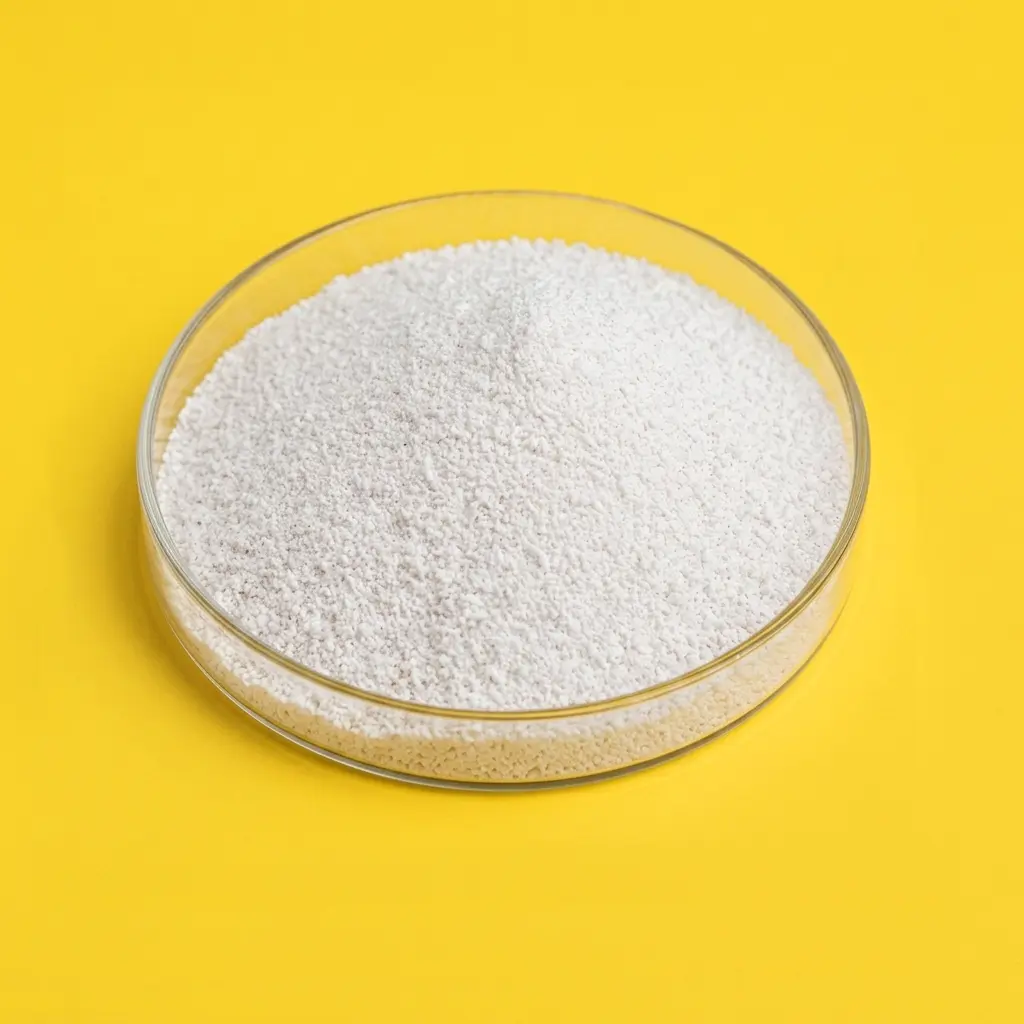
TCCA granules are commonly supplied as a white solid. Unusual discoloration, visible contamination, or unexpected physical deterioration should be investigated before use.
Manufacturing Consistency
Reliable production controls help maintain consistent chemical and physical characteristics across different batches.
Commercial buyers should request documented quality specifications instead of relying solely on visual inspection or general product descriptions.
6. Comparing TCCA 90 Granules With Other Formulations
TCCA is available in different physical forms. Each has characteristics that may make it more suitable for particular handling and treatment arrangements.
TCCA Granules
Granules provide a solid format that can be convenient for controlled preparation and compatible dosing systems.
Their particle size and dissolution behavior should be assessed against the intended process.
TCCA Tablets
Tablets are compressed solid products designed to dissolve over time. They may be suitable for systems with compatible tablet feeders or controlled-release arrangements.
Tablet hardness, dimensions, and dissolution rate are important comparison factors.
TCCA Powder
Powder offers a finer physical form that may be suitable for certain chemical preparation systems. However, dust exposure and handling requirements should be considered.
Choosing the Right Form
The most suitable formulation depends on the treatment equipment, operational scale, water chemistry, handling procedures, and product instructions. Buyers should not assume that granules, tablets, and powders can be substituted without adjusting the approved treatment process.
7. Commercial Applications of TCCA 90 Granules
TCCA 90 granules may be considered for selected commercial disinfection applications, provided the specific product and treatment method are appropriate.
Swimming Pool Sanitation
TCCA is commonly used in swimming pool water treatment to provide available chlorine for controlling susceptible microorganisms.
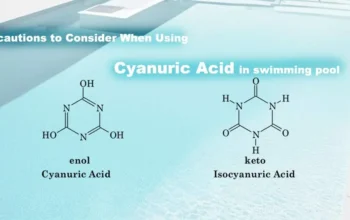
Operators should monitor free chlorine, pH, and cyanuric acid where relevant. Because TCCA contributes cyanuric acid as it dissolves, stabilizer levels should be managed according to pool standards and treatment requirements.
Industrial Water Treatment
Some industrial systems require chemical disinfection to manage microbial contamination in process water or other selected water circuits.
Product selection should account for system materials, water chemistry, chemical compatibility, and residual management.
Wastewater Disinfection
Certain wastewater processes include disinfection before discharge or reuse. The suitability of TCCA depends on wastewater composition, organic loading, treatment objectives, and applicable environmental requirements.
Residual disinfectant may require control before discharge, depending on the relevant permit or standard.
Surface and Equipment Sanitation
Approved TCCA formulations may be used in selected sanitation procedures involving surfaces and equipment. The label should specify the permitted application, preparation method, contact conditions, and any required rinsing steps.
Aquaculture Facility Sanitation
Chlorine-based products may be used for selected sanitation tasks involving empty tanks and equipment between production cycles.
TCCA should not be added to occupied fish or shrimp systems unless an authorized, application-specific protocol establishes its suitability and safeguards. Chlorine residuals can be harmful to aquatic organisms.
8. Dissolution and Treatment Conditions
The behavior of TCCA granules in water depends on several operating conditions.
Water temperature: Temperature can influence dissolution and chemical reaction rates.
Particle size: Smaller particles may dissolve differently from larger granules because of differences in surface area.
Water movement: Circulation and mixing influence contact between the product and water.
Formulation: Manufacturing processes and granule structure can affect dissolution characteristics.
Water chemistry: pH, organic contamination, and other water quality parameters influence chlorine behavior and treatment demand.
Commercial users should obtain product-specific guidance and use suitable equipment and procedures. A universal dosage or dissolution time should not be assumed for every system.
9. Safe Storage and Handling Considerations
TCCA is an oxidizing chemical, so correct storage and handling are essential for workplace safety and product stability.
Recommended precautions include:
- Read the Safety Data Sheet and product label before handling.
- Wear appropriate gloves, eye protection, and other specified personal protective equipment.
- Keep the product in its original, tightly sealed packaging.
- Store it in a cool, dry, and well-ventilated area.
- Protect it from moisture, heat, and contamination.
- Keep it away from acids, ammonia, oils, reducing agents, and combustible materials.
- Never mix TCCA with other pool chemicals or cleaning products.
- Use clean, dry handling equipment suitable for oxidizing chemicals.
- Train employees in safe handling and emergency response procedures.
Storage facilities should follow the manufacturer’s instructions and applicable chemical safety regulations.
10. Documentation to Request When Comparing Suppliers
Product documentation helps commercial buyers verify quality and maintain purchasing records.
Certificate of Analysis
A batch-specific Certificate of Analysis should identify relevant tested properties, including available chlorine content and other agreed quality parameters.
Technical Data Sheet
The technical data sheet provides information about the product’s physical and chemical characteristics, intended applications, and handling limitations.
Safety Data Sheet
The SDS explains chemical hazards, protective equipment, storage conditions, and emergency procedures.
Product Specification
The product specification should clearly describe the required available chlorine content, particle-size characteristics where relevant, moisture limits, and other quality requirements.
Batch Traceability
Batch identification supports quality management by connecting delivered products with their manufacturing and testing records.
11. How to Select a Reliable TCCA 90 Granules Supplier
Supplier evaluation should consider product quality and long-term supply performance.
Before purchasing, buyers should assess:
- Available chlorine content and testing method.
- Chemical purity and relevant impurity limits.
- Particle-size distribution and granule uniformity.
- Moisture content and packaging protection.
- Batch-specific Certificate of Analysis.
- Technical and safety documentation.
- Manufacturing quality control procedures.
- Product suitability for the intended application.
- Supply capacity and delivery consistency.
- Technical support and communication.
A dependable supplier should provide transparent specifications, reliable documentation, and clear information about product limitations.
Conclusion
TCCA 90 granules are a high-available-chlorine formulation used in selected commercial water disinfection and sanitation applications. Comparing products requires attention to more than the stated chlorine content. Particle size, purity, moisture, dissolution behavior, packaging, and batch consistency all contribute to product quality and handling performance.
For commercial buyers, reviewing technical documentation and supplier quality controls can help reduce purchasing risks and support consistent operations. By matching the product to the intended application and following appropriate safety and treatment procedures, facilities can make more informed decisions when sourcing granular TCCA.