Efficient carton preparation is an essential part of modern packaging operations. In industries such as food and beverage, pharmaceuticals, electronics, and consumer goods, packaging lines must maintain a consistent supply of properly formed cartons to support uninterrupted production. When cartons are prepared manually, the process can become time-consuming, labor-intensive, and difficult to manage as production demands increase.
An Automatic Case Erector helps address these challenges by automating the process of forming flat-packed carton blanks into ready-to-use cases. By reducing manual handling and maintaining a steady carton supply, this equipment supports smoother workflows and improves the overall efficiency of packaging lines.
Understanding the Carton Erection Process
Carton erection is the process of converting flat cardboard blanks into fully formed boxes that can be used for product packaging. Before products can be loaded into cases, the carton must be opened, shaped, and secured so that it maintains its structure during filling and transportation.
Traditionally, workers performed these steps manually. Although manual carton preparation can work for small-scale operations, it becomes less practical when production volumes increase or packaging lines operate at high speeds.
Automated carton erection equipment performs these operations through a coordinated mechanical process, helping businesses maintain consistent carton preparation with less direct labor.
How an Automatic Case Erector Works
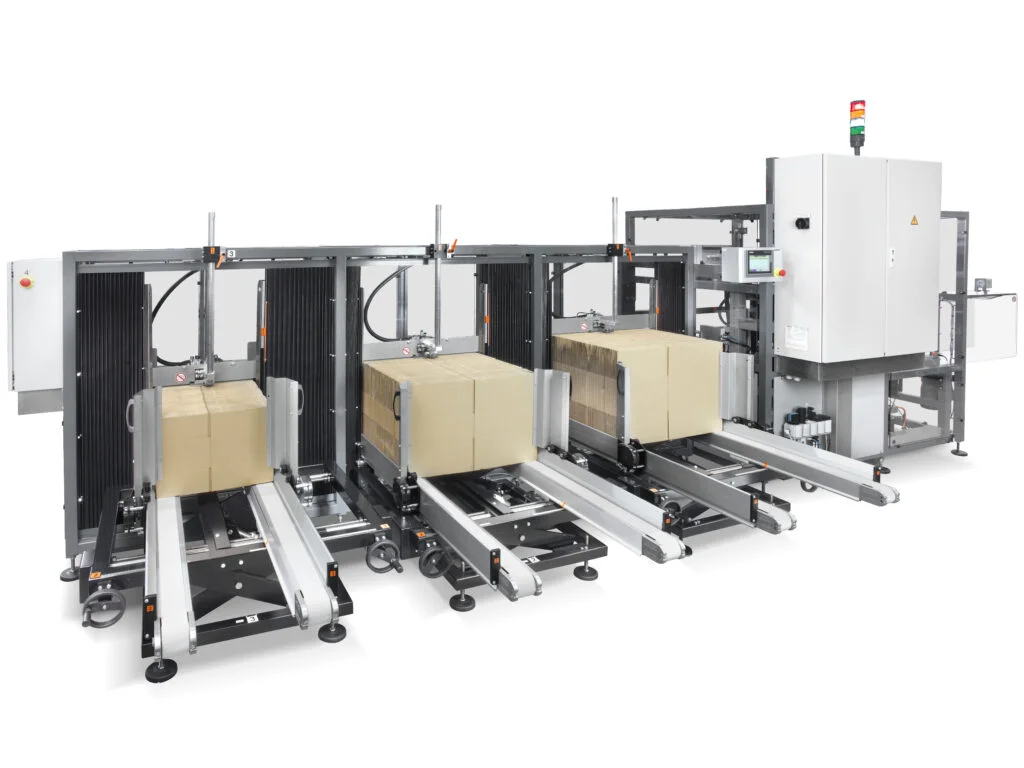
An automatic case erector uses mechanical components and automated controls to transform flat carton blanks into properly assembled cases. While specific designs vary between manufacturers, most systems follow a similar sequence.
1. Carton Blank Loading
Flat carton blanks are loaded into a designated magazine or storage section. This arrangement keeps the blanks organized and makes them available for continuous feeding into the machine.
The magazine capacity and feeding mechanism depend on the machine design and the carton sizes being processed.
2. Carton Picking and Opening
A feeding mechanism selects individual carton blanks and transfers them into the forming section. Vacuum suction cups or mechanical gripping systems are commonly used to pick up and open the blanks.
The carton is then expanded into its intended box shape, ensuring that its panels and corners are correctly positioned.
3. Bottom Flap Folding
Once the carton has been opened, the machine folds the bottom flaps into position. These flaps must be aligned properly to create a stable base for the case.
Accurate folding is important because poorly positioned flaps can affect carton stability and cause problems during subsequent filling operations.
4. Carton Sealing
Depending on the machine configuration, the bottom of the carton is secured using adhesive tape or hot-melt glue.
This step creates a closed base that can support products during filling, handling, and transportation.
5. Case Discharge
After forming and sealing, the completed carton moves out of the machine and is transferred to the next stage of the packaging line.
This may include automatic case packing, product loading, weighing, or other downstream packaging operations.
Key Ways Automatic Case Erectors Improve Packaging Efficiency
Automating carton preparation offers several operational advantages, particularly for facilities that handle large packaging volumes.
Reduced Manual Labor
Manual carton assembly requires employees to repeatedly open, fold, and seal boxes. An automated system performs these repetitive tasks, allowing workers to focus on other production activities.
This can also reduce physical strain associated with repetitive carton handling.
Consistent Carton Formation
Consistency is important in packaging because improperly formed cartons can create difficulties during product loading and case sealing.
Automatic case erectors follow controlled forming sequences, helping maintain uniform carton dimensions and properly folded panels. This supports smoother operation throughout the packaging process.
Improved Production Flow
Packaging lines depend on a continuous supply of prepared cartons. If carton preparation cannot keep pace with product output, bottlenecks may develop.
Automated erection equipment helps maintain a steady supply of cases, reducing interruptions caused by manual box assembly.
Better Space Utilization
Flat-packed cartons generally require less storage space than fully assembled boxes. An automatic case erector converts these blanks into usable cartons when they are needed.
This approach can help manufacturers organize their packaging materials more efficiently while reducing the need to store large quantities of preassembled cases.
Reduced Packaging Errors
Manual carton preparation can result in inconsistent folding, misaligned flaps, and incomplete sealing. These issues may affect carton strength and create problems during transportation.
Automated processes help reduce variations by using controlled mechanical movements and repeatable operating sequences.
Important Features to Consider When Selecting Equipment
Choosing suitable carton erection equipment requires an understanding of production requirements and packaging specifications. Several factors should be evaluated before making a decision.
- Carton size compatibility: The machine should accommodate the dimensions and styles of cartons used in the facility.
- Production speed: Its operating capacity should match the required output of the packaging line.
- Sealing method: Businesses should consider whether tape sealing or hot-melt adhesive is more suitable for their carton materials and packaging requirements.
- Changeover flexibility: Equipment that allows straightforward adjustments can be useful when different carton sizes are processed.
- Integration capabilities: The machine should work effectively with downstream equipment, including case packers and sealing systems.
- Maintenance requirements: Accessible components and straightforward maintenance procedures can help reduce equipment downtime.
Evaluating these factors helps manufacturers select equipment that fits their operational needs rather than focusing exclusively on machine speed.
Integration with Other Packaging Line Equipment
An automatic case erector is often one component of a larger packaging system. Its performance depends partly on how effectively it communicates and operates with other machines in the production line.
For example, erected cartons can be transferred directly to automatic case packing equipment, where products are loaded into the prepared cases. Once filled, the cartons can move to case sealing systems for final closure.
Conveyor systems connect these different stages and help maintain an organized product flow.
Proper integration requires attention to conveyor height, transfer speed, carton dimensions, and machine operating cycles. When these elements are coordinated, manufacturers can reduce unnecessary handling and improve overall packaging line performance.
Maintenance Practices for Reliable Operation
Routine maintenance is essential for keeping carton erection equipment operating consistently. Dust, cardboard particles, adhesive residue, and mechanical wear can affect machine performance if they are not addressed.
Manufacturers should establish a maintenance schedule that includes:
- Inspecting suction cups, gripping components, and carton feeding mechanisms.
- Cleaning areas where cardboard dust and adhesive residue may accumulate.
- Checking folding mechanisms and mechanical alignment.
- Inspecting tape or adhesive application components.
- Verifying sensor operation and automated control settings.
- Replacing worn components according to maintenance recommendations.
Operators should also receive appropriate training so they can identify common operating issues and follow safe equipment procedures.
Common Applications Across Different Industries
Automatic case erectors are used in various industries where products need to be packed into corrugated cartons for storage and distribution.
Food and Beverage: Manufacturers use erected cartons to prepare cases for packaged foods, bottled drinks, canned products, and other consumer goods.
Pharmaceuticals: Packaging operations use cartons to organize and transport packaged medical products, subject to applicable handling and packaging requirements.
Electronics: Properly formed cases provide an organized outer packaging structure for electronic products and accessories.
Personal Care and Household Products: Manufacturers use automated carton preparation to support the packaging of cosmetics, cleaning supplies, and everyday consumer products.
The specific carton material, dimensions, and sealing requirements vary depending on the product and distribution conditions.
Conclusion
Efficient carton preparation plays an important role in maintaining productivity across modern packaging lines. Manual box assembly may be suitable for smaller operations, but increasing production demands often require more consistent and reliable preparation methods.
Automatic case erectors simplify the carton forming process by automating blank feeding, opening, flap folding, bottom sealing, and case discharge. When properly selected, integrated, and maintained, this equipment can reduce repetitive labor, improve carton consistency, and support a smoother packaging workflow.
Understanding machine capabilities and matching them with actual production requirements allows manufacturers to make informed decisions about carton preparation and overall packaging line efficiency.