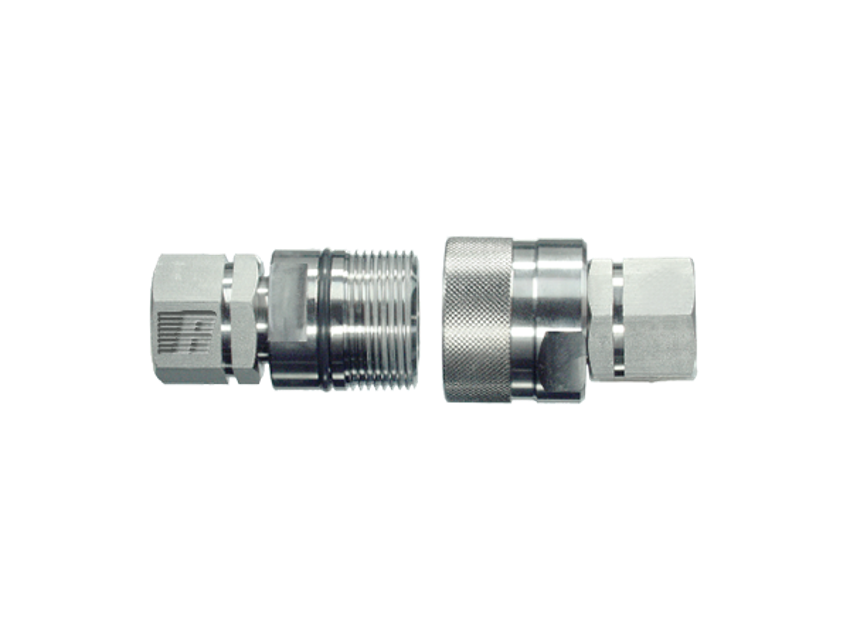
Industrial equipment often relies on hydraulic, pneumatic, and other fluid transfer systems to perform demanding tasks consistently. In these systems, connection components influence how efficiently fluids move between machines, hoses, and accessories. When connections are difficult to install, prone to leakage, or time-consuming to disconnect, they can increase maintenance demands and interrupt production. Reliable coupling solutions help businesses overcome these challenges and maintain smoother operations.
Modern Quick Couplings provide a practical way to connect and disconnect fluid lines with less effort than many conventional connection methods. Designed for convenient operation and dependable performance, they can support faster equipment setup, simplify servicing, and reduce unnecessary fluid loss. Understanding their benefits helps industrial operators select suitable components for their equipment and operating conditions.
1. Faster Equipment Connection and Setup
In industrial environments, equipment may need to be connected, relocated, or reconfigured regularly. Conventional connections can require additional tools and manual effort, making these tasks more time-consuming.
Quick couplings use specialized engagement mechanisms that allow compatible connection halves to be joined efficiently. Depending on the design, operators may use push-to-connect, sleeve-locking, or threaded mechanisms to establish a secure connection.
This can improve operational workflows by:
- Reducing the time required to connect fluid lines.
- Simplifying equipment installation and replacement.
- Making routine attachment changes more convenient.
- Reducing dependence on tools for compatible connection types.
- Supporting faster equipment changeovers.
Proper engagement must always be verified before the system is pressurized or placed into service.
2. Reduced Equipment Downtime
Unexpected downtime can affect production targets, labor costs, and delivery schedules. Maintenance teams need connection components that allow them to access equipment without unnecessary disassembly.
Quick couplings make it easier to separate compatible hoses, tools, and equipment sections during inspection or repair. This can help technicians isolate specific components and complete maintenance tasks more efficiently.
For industrial facilities, reduced connection time can be especially useful when:
- Replacing hydraulic hoses or accessories.
- Servicing production machinery.
- Changing tools on mobile equipment.
- Performing scheduled maintenance.
- Reconfiguring fluid supply lines.
The actual reduction in downtime depends on system design, maintenance procedures, and how frequently connections are changed.
3. Improved Fluid Control and Leakage Prevention
Fluid leakage can create safety concerns, waste valuable materials, and reduce equipment efficiency. In hydraulic and pneumatic systems, unwanted fluid loss may also interfere with pressure control and overall performance.
Many quick coupling designs incorporate internal valves and sealing arrangements that help control fluid flow during connection and disconnection. Certain configurations are designed to minimize spillage when separated, while others prioritize high-flow performance or specific pressure requirements.
To achieve reliable fluid control, consider:
- The fitting’s working pressure rating.
- Seal material and fluid compatibility.
- Internal valve configuration.
- Connection and disconnection conditions.
- Required leakage-control performance.
- Operating temperature and environmental exposure.
Choosing the correct design and maintaining clean connection surfaces can help reduce leakage risks throughout the equipment’s service life.
4. Consistent Equipment Performance
A fluid system depends on connections that maintain the required flow and pressure conditions. Poorly selected couplings may restrict fluid movement, introduce excessive pressure drop, or create unreliable connections.
Industrial quick couplings are available in different passage sizes and configurations to accommodate varying flow requirements. Selecting a suitable model helps ensure that the connection supports the intended operating conditions.
Important performance considerations include:
- Required flow rate.
- Maximum working pressure.
- Pressure drop across the coupling.
- Fluid viscosity and operating temperature.
- Connection size and internal passage dimensions.
- Compatibility with the connected equipment.
Matching these specifications helps prevent connection-related performance problems and supports consistent equipment operation.
5. Greater Flexibility Across Industrial Applications
Different industries have different fluid transfer requirements. Quick couplings are manufactured in various materials, sizes, connection profiles, and valve configurations, making them suitable for a wide range of equipment.
Hydraulic Machinery
Construction equipment, agricultural machinery, lifting systems, and industrial power units use hydraulic couplings to connect hoses and accessories. Suitable designs help simplify equipment servicing and attachment changes.
Pneumatic Equipment
Compressed-air systems use quick connection solutions to attach tools, hoses, and accessories. The correct pressure rating and connection profile are essential for reliable operation.
Manufacturing and Processing
Production facilities often require flexible fluid connections for machinery, cooling circuits, and specialized process equipment. Quick couplings can make maintenance and system reconfiguration more convenient.
Automotive and Mobile Equipment
Service equipment and mobile machinery benefit from connections that allow technicians to replace compatible components and carry out maintenance with less disruption.
General Fluid Transfer
Certain coupling designs are suitable for water, oil, coolants, and other fluids, provided their materials and seals are compatible with the application.
6. Simplified Maintenance and Inspection
Regular inspection is essential for identifying wear, contamination, and potential leakage before they cause equipment problems. Quick couplings can make maintenance more straightforward by allowing selected sections of a system to be disconnected when necessary.
Technicians can access hoses, valves, and other connected components without dismantling larger assemblies unnecessarily.
A practical inspection routine should include:
- Checking coupling bodies for cracks, corrosion, and physical damage.
- Examining seals for wear or deformation.
- Inspecting locking mechanisms for secure engagement.
- Cleaning exposed connection surfaces before assembly.
- Checking for leakage during approved operational testing.
- Replacing damaged components according to manufacturer recommendations.
Protective caps and plugs should also be used when connections are disconnected to prevent dirt and moisture from entering the fluid circuit.
7. Choosing the Right Coupling for Industrial Conditions
The benefits of quick couplings depend on selecting a product that matches the equipment’s technical and environmental requirements. A fitting that works well in one application may not be suitable for another.
Before purchasing, evaluate these factors:
Material and Corrosion Resistance
Steel provides strength for many demanding applications, while stainless steel offers enhanced corrosion resistance in suitable environments. Other materials may be appropriate for specific fluid and pressure requirements.
Pressure and Temperature Limits
Confirm that the coupling can safely handle the system’s working pressure, possible pressure surges, and operating temperature range.
Sealing Technology
Check the seal material and design to ensure compatibility with the fluid and expected operating conditions.
Connection Mechanism
Choose a locking or engagement design that suits the required connection frequency, vibration exposure, and operating environment.
Flow Requirements
Review the internal passage dimensions and pressure-drop specifications to ensure the coupling does not unnecessarily restrict fluid movement.
Industry Standards
Where applicable, verify dimensional standards, interchangeability requirements, and relevant manufacturer specifications before connecting components from different sources.
8. How Proper Selection Supports Cost Efficiency
Although the initial purchase price is an important consideration, the total cost of a coupling also includes installation effort, maintenance requirements, replacement frequency, and potential downtime.
A durable, application-appropriate coupling can help reduce avoidable operating expenses by supporting reliable connections and convenient servicing.
Long-term cost benefits may include:
- Less time spent on routine connection tasks.
- Reduced disruption during maintenance.
- Fewer leakage-related cleaning requirements.
- More convenient replacement of compatible components.
- Improved availability of connected equipment.
These advantages are most effective when fittings are correctly specified, installed, and maintained.
9. Best Practices for Reliable Operation
Even high-quality couplings can experience problems when handled incorrectly. Following consistent operating procedures helps preserve their performance and service life.
Industrial operators should:
- Verify compatibility before connecting coupling halves.
- Relieve trapped pressure when required by the manufacturer’s instructions.
- Keep mating surfaces clean.
- Avoid forcing connections that do not engage correctly.
- Check that locking mechanisms are fully secured.
- Inspect fittings periodically for wear and leakage.
- Replace damaged seals and components promptly.
- Follow specified pressure and temperature limits.
Training personnel in proper connection procedures also helps reduce installation errors and improve workplace safety.
Conclusion
Industrial quick couplings contribute to operational efficiency by making fluid connections faster, maintenance more convenient, and equipment configurations more flexible. Their ability to support controlled fluid transfer and reliable connections makes them valuable across hydraulic, pneumatic, manufacturing, automotive, and general industrial applications.
To achieve the best results, businesses should evaluate pressure capacity, flow requirements, materials, sealing performance, and connection compatibility before selecting a product. Combined with correct installation and regular inspection, suitable quick couplings can help reduce downtime, control maintenance costs, and maintain dependable equipment performance.