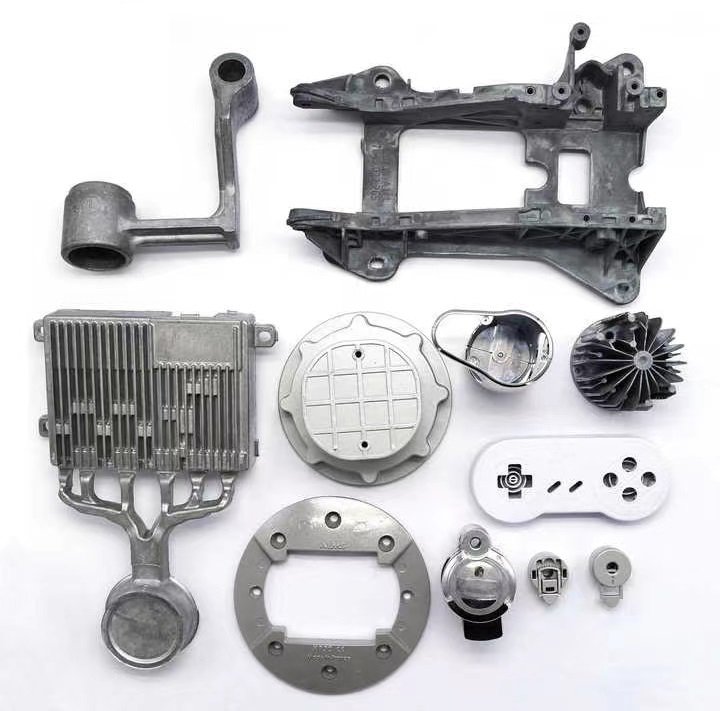
Reducing product weight without sacrificing practical strength is an important objective in many engineering sectors. Vehicle manufacturers, equipment designers, and electronics producers continually look for materials and manufacturing methods that can deliver this balance. Aluminum is attractive because of its relatively low density and useful engineering properties. When shaped through die casting, it can be used to produce components with detailed geometry and repeatable dimensions.
The role of Aluminum Die Casting extends beyond simply creating a lightweight metal shape. The process can support integrated features, efficient volume production, and designs that combine structural and thermal functions. To achieve these benefits, engineers must consider alloy characteristics, mold design, metal flow, cooling behavior, and the component’s final operating conditions.
Why weight reduction matters
Component weight affects more than the mass of an individual part. In vehicles, reducing the weight of selected components can contribute to lower overall vehicle mass. In portable equipment, lighter housings and structural parts can improve handling. In machinery, reducing unnecessary mass may help designers manage moving loads and support structures.
Aluminum offers a lower density than many commonly used structural metals. This makes it useful where a component needs to occupy a defined volume without adding excessive weight. However, material selection should not be based on density alone. Strength, stiffness, fatigue behavior, temperature exposure, corrosion conditions, and manufacturing requirements must also be evaluated.
How die casting creates complex components
In die casting, molten aluminum alloy is injected into a shaped steel die. The metal fills the cavity under controlled pressure and solidifies before the mold opens. Ejector mechanisms then release the casting for trimming and further processing.
The mold can incorporate details such as ribs, bosses, mounting points, and shaped surfaces. These features can improve structural performance or allow different functions to be integrated into one component. Combining features may reduce the need for separate brackets, fasteners, or machined pieces.
Tooling design is critical because the metal must flow through the cavity and solidify in a controlled manner. Gates, runners, vents, cooling channels, and ejector locations all influence the quality of the casting. A well-designed mold supports consistent filling and helps manage defects.
Designing for strength and durability
A lightweight casting still needs to withstand the forces it experiences in service. Designers should assess static loads, vibration, impact, fatigue, temperature changes, and mounting stresses. The alloy must be selected to suit these conditions.
Geometry is equally important. Ribs can add stiffness without requiring uniformly thick walls, while smooth transitions can reduce stress concentrations. Wall thickness should be considered carefully because major variations may contribute to uneven cooling and shrinkage defects.
The casting’s performance also depends on its interfaces. Machined holes, threads, sealing surfaces, and bearing locations may require additional operations to achieve the necessary accuracy. Their location should be considered during the initial design so that tooling and machining access are practical.
Thermal and enclosure applications
Aluminum’s thermal conductivity makes it useful in certain components that need to transfer or dissipate heat. Die-cast housings and enclosures may be designed with external ribs or other surface features to increase heat-transfer area.
Applications can include electric motor housings, lighting components, electronic equipment enclosures, and industrial control products. The casting’s thermal performance depends on alloy, geometry, surface area, airflow, mounting, and the heat generated by the equipment.
An enclosure may also need to protect internal components from environmental exposure. In such cases, sealing surfaces, wall integrity, and the quality of machined interfaces become important.
Production consistency and cost
Reusable dies can support repeated production with consistent component geometry. This can be valuable for programs with substantial annual demand. Once tooling is developed and the process is stable, production cycles can be efficient.
However, the initial tooling investment can be significant. Die casting is generally more attractive when production quantities justify the cost of mold design, manufacture, maintenance, and validation. Low-volume projects may require a comparison with machining, fabrication, or other casting processes.
Inspection and process control
Manufacturers should monitor alloy composition, melt quality, die condition, injection parameters, and cooling conditions. Inspection may include dimensional checks, surface examination, leak testing, and internal defect evaluation. Components used in structural or pressure-related applications may require additional validation.
Testing should reflect the intended function. For example, a housing that contains fluid may need leak testing, while a load-bearing bracket may require mechanical assessment.
A balanced route to lighter components
Aluminum die casting can support lightweight and durable production when the material, geometry, and manufacturing process are selected together. It offers opportunities to integrate features and manufacture repeatable components, but it still requires careful design and quality control. Evaluating the complete service environment helps ensure that weight reduction does not come at the expense of reliability.