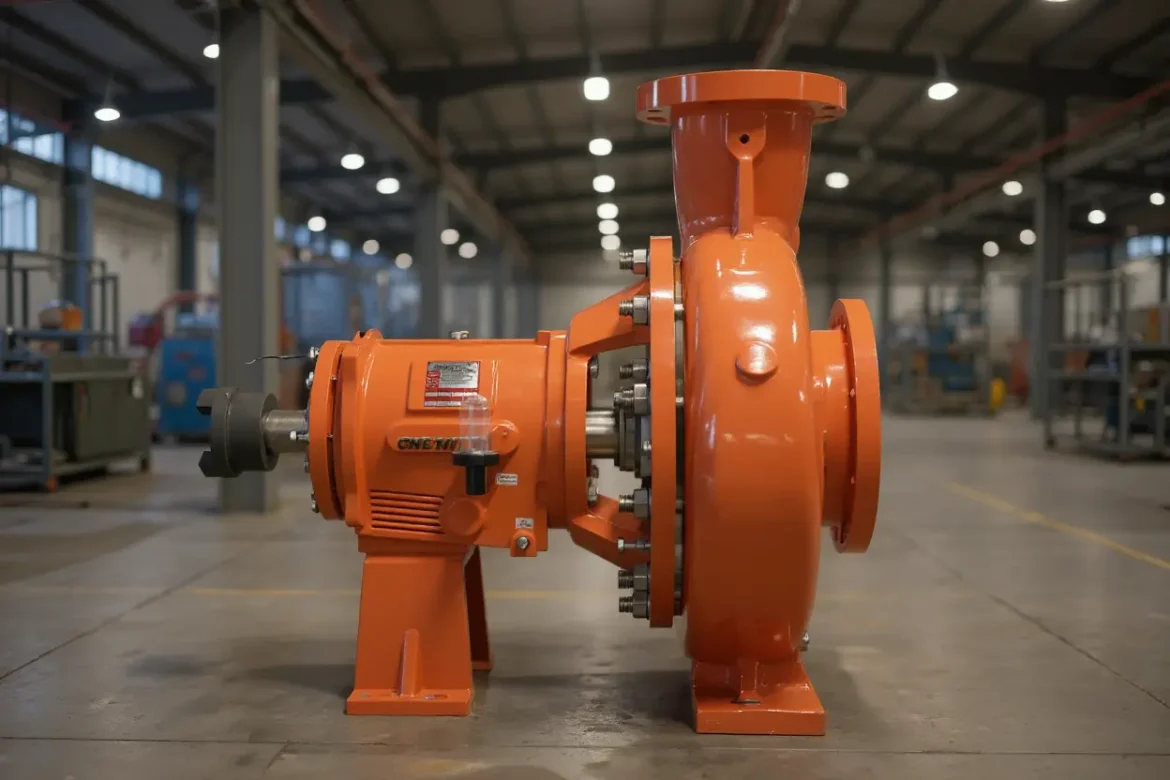
Mining and mineral processing operations rely on pumping systems to move water, ore, tailings, concentrates, and other solid-containing materials. These applications can place significant demands on equipment because the transported slurry may contain hard, abrasive particles at high concentrations.
A centrifugal slurry pump is designed to handle these demanding conditions by combining suitable hydraulic performance with construction intended for abrasive service. Selecting and operating the right pump requires an understanding of the material properties and the specific requirements of the process.
Why Slurry Pumps Are Important in Mining
Mining processes frequently involve mixtures of water and crushed or ground minerals. These materials can be highly abrasive and may cause rapid wear when handled by equipment that is not designed for slurry service.
Slurry pumps help move these mixtures between different stages of a processing operation. Reliable pumping is important because interruptions can affect production, processing capacity, and overall plant efficiency.
Common Mining Applications
Slurry pumps can be used in many stages of mining and mineral processing. Their specific role depends on the type of material and process configuration.
Typical applications include:
- Ore transfer
- Grinding circuit discharge
- Hydrocyclone feed
- Flotation processes
- Concentrate handling
- Tailings transport
- Sand and aggregate processing
- Mineral recovery systems
Each application can involve different flow rates, pressures, particle sizes, and slurry concentrations.
Handling Abrasive Slurry
Abrasive wear is one of the primary challenges in mineral processing. Crushed rock and mineral particles can gradually erode impellers, casings, liners, and other wetted components.
Wear rates depend on several factors, including particle hardness, size, shape, concentration, and velocity. Selecting appropriate materials and maintaining suitable operating conditions can help control component wear.
Importance of Slurry Characteristics
Before selecting a pump, the properties of the slurry should be established as accurately as possible. Even small changes in material composition can affect pump performance and service life.
Important parameters include slurry density, solids concentration, particle size distribution, particle hardness, temperature, and chemical characteristics.
The more accurate this information is, the easier it becomes to select an appropriate pump size, material configuration, and operating range.
Selecting the Right Pump Size
Pump sizing should be based on the actual system requirements rather than maximum possible capacity. Flow rate and total head are the primary hydraulic parameters, but slurry properties must also be considered.
Pipeline length, elevation changes, friction losses, valves, fittings, and other equipment can all affect the required head. The pump should operate within a suitable range at the normal process duty point.
Oversizing can increase energy consumption, while undersizing may result in insufficient capacity or excessive operating stress.
Material Selection for Mining Service
The materials used for wetted components should match the slurry conditions. Highly abrasive applications may require materials with strong resistance to erosion, while chemically aggressive slurries may require additional corrosion resistance.
Hard metal components can be suitable for many abrasive mineral-processing applications. In other situations, elastomer-based components may provide advantages depending on particle size, concentration, temperature, and chemical conditions.
Material selection should always be based on the actual slurry rather than the application name alone.
Managing Pump Wear
Wear is unavoidable in many mining applications, but it can be managed through appropriate design and operation.
Regularly inspect wear components and monitor changes in flow, pressure, vibration, and motor load. Increasing power consumption or declining hydraulic performance can sometimes indicate that internal components are becoming excessively worn.
Maintaining records of component service life can also help establish practical maintenance intervals.
Pump Operation in Grinding Circuits
Grinding circuits can generate particularly abrasive slurry because mineral particles are reduced to smaller sizes while remaining hard and dense.
Pumps used in these circuits need to accommodate the required flow and head while resisting continuous exposure to solids. Stable operation is important because fluctuations can affect downstream equipment such as classification systems and hydrocyclones.
Proper pump speed and operating conditions can help maintain consistent circuit performance.
Tailings and Waste Slurry Transport
Tailings systems often involve large volumes of slurry transported over considerable distances. Pipeline resistance and elevation changes can therefore have a major effect on pump requirements.
System design should consider the settling characteristics of the solids and maintain appropriate transport velocity. If solids settle inside the pipeline, restrictions can develop and increase the load on the pumping system.
Energy Efficiency Considerations
Mining operations often run pumps continuously, making energy consumption an important operating cost. Pump efficiency should therefore be considered during both selection and operation.
Operating close to the intended duty point can help avoid unnecessary energy losses. Correct pipeline sizing, appropriate pump speed, and regular maintenance can also contribute to efficient operation.
Maintenance Requirements
Preventive maintenance is particularly important in mining environments because unexpected equipment failures can disrupt production.
Maintenance programs may include:
- Inspecting impellers, liners, and casings.
- Checking bearings and lubrication.
- Monitoring vibration and temperature.
- Checking seals and leakage.
- Recording flow, pressure, and motor load.
- Inspecting suction and discharge piping.
- Reviewing wear rates and replacement history.
The maintenance interval should reflect the severity of the application and actual component wear.
How to Improve Reliability
Reliable slurry pumping depends on more than pump construction. The pump, piping, valves, drive system, and process conditions must work together.
Avoid excessive pump speed, unstable suction conditions, unnecessary flow restrictions, and prolonged operation outside the intended range. Monitoring changes in slurry density and solids concentration can also help prevent unexpected operating problems.
Final Thoughts
Centrifugal slurry pumps play an important role in mining and mineral processing because they are designed to handle fluids containing abrasive solid particles. Their successful use depends on matching pump size, materials, hydraulic performance, and operating conditions to the specific application.
Accurate slurry data, appropriate system design, regular maintenance, and controlled operation can help reduce wear and improve reliability. A complete approach to pump selection and operation can support consistent material transport and minimize unnecessary downtime in demanding mineral-processing environments.