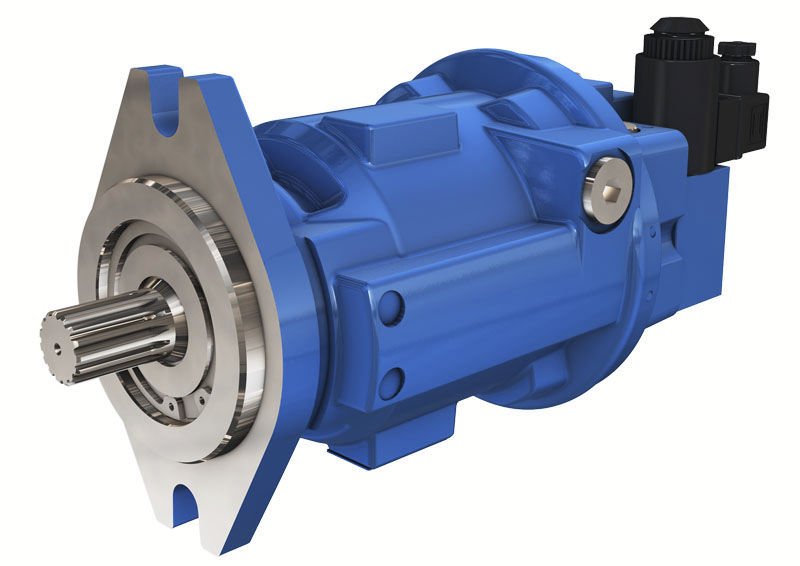
Hydraulic motors play an important role in converting hydraulic energy into mechanical motion across industrial and mobile equipment. Their efficiency can influence energy consumption, heat generation, operating costs, and overall machine performance.
A hydraulic motor manufacturer can improve equipment efficiency through motor design, component selection, manufacturing accuracy, and performance testing. However, efficiency ultimately depends on how well the motor is matched to the complete hydraulic system and operating conditions.
Understanding Hydraulic Motor Efficiency
Hydraulic motor efficiency describes how effectively the motor converts hydraulic input energy into useful mechanical output. Energy losses can occur through internal fluid leakage, friction, heat, and other mechanical effects.
Two important aspects are volumetric efficiency and mechanical efficiency. Volumetric efficiency relates to how effectively hydraulic flow is converted into motor displacement, while mechanical efficiency considers losses caused by friction and other mechanical resistance.
Optimizing Motor Displacement
Motor displacement determines how much hydraulic fluid is required to produce a given amount of rotation. Selecting an appropriate displacement can help the motor operate within its intended speed and torque range.
If displacement is poorly matched to the hydraulic system, the motor may operate inefficiently or require excessive flow and pressure. Proper sizing is therefore one of the first steps toward improving equipment efficiency.
Reducing Internal Leakage
Internal leakage allows hydraulic fluid to bypass the components responsible for generating mechanical movement. Excessive leakage reduces volumetric efficiency and can increase heat generation.
Manufacturers can control leakage through precise component dimensions, appropriate internal clearances, accurate machining, and effective sealing design.
Maintaining these characteristics throughout production is essential for consistent motor performance.
Improving Mechanical Efficiency
Mechanical friction is another source of energy loss. Bearings, gears, pistons, vanes, shafts, and other moving components must operate with appropriate contact and lubrication conditions.
Manufacturers can improve mechanical efficiency through component geometry, surface finishing, material selection, bearing design, and controlled clearances.
The objective is to reduce unnecessary resistance without compromising durability.
Using Precision Manufacturing
Small manufacturing variations can affect hydraulic motor efficiency. Components that are incorrectly machined or assembled may increase friction or internal leakage.
Precision manufacturing and dimensional inspection help maintain the clearances and alignment required by the motor design.
Consistent production is especially important when motors are supplied for large equipment fleets or repeated machine models.
Selecting Appropriate Materials
Materials influence friction, wear, strength, and operating life. Manufacturers select materials according to the loads and environmental conditions expected during operation.
For example, shafts and gears need suitable strength and wear resistance, while seals must remain compatible with hydraulic fluid and operating temperatures.
Appropriate materials can help maintain motor performance over time and reduce losses associated with component degradation.
Designing Efficient Gear Motors
Gear motors use rotating gears to convert hydraulic energy into shaft rotation. Their relatively simple design can provide practical efficiency for many moderate-duty applications.
Efficiency depends on factors such as gear geometry, tooth quality, internal clearances, bearing performance, and sealing.
Manufacturers can optimize these characteristics to reduce leakage and mechanical losses while maintaining reliable operation.
Improving Vane Motor Performance
Vane motors depend on controlled movement between vanes, the rotor, and surrounding surfaces. Internal clearances and surface conditions can have a significant effect on performance.
Proper engineering can help maintain effective sealing between moving components while minimizing friction.
This balance is important because excessive clearance can increase leakage, while insufficient clearance can increase friction and heat.
Engineering High-Efficiency Piston Motors
Piston motors are commonly used in applications requiring high pressure, torque, or efficiency. Their more complex construction provides engineers with multiple opportunities to optimize performance.
Design considerations can include piston geometry, cylinder surfaces, bearing arrangements, displacement control, and fluid distribution.
Properly engineered piston motors can provide strong efficiency across demanding operating conditions.
Managing Heat Generation
Energy losses eventually appear in various forms, including heat. Excessive heat can reduce hydraulic system efficiency and negatively affect seals, fluid properties, and component life.
Motor manufacturers can address heat generation through efficient internal design and appropriate operating specifications.
Equipment designers should also ensure that the hydraulic circuit has sufficient cooling capacity and uses fluid with suitable viscosity characteristics.
Matching Motor Speed to the Application
Operating a motor outside its preferred speed range can reduce efficiency and increase wear. Manufacturers provide speed limits and recommended operating ranges based on motor design.
Selecting a motor with an appropriate speed capability helps the equipment operate closer to its intended performance range.
Variable-displacement motors can provide additional flexibility when equipment requires different speed and torque conditions.
Optimizing Torque Requirements
A hydraulic motor should produce sufficient torque without being significantly oversized for the application. An oversized motor may increase system requirements without providing useful performance benefits.
Manufacturers and equipment designers can evaluate starting torque, continuous torque, peak torque, and load variations to select an appropriate motor.
Correct torque matching can help prevent unnecessary pressure and energy consumption.
Reducing Pressure Losses
Pressure losses can occur throughout a hydraulic system, including within the motor and associated valves, hoses, and fittings.
Efficient motor design can reduce internal losses, but the complete circuit must also be considered. Appropriate hydraulic lines, filtration, valves, and pump selection can help reduce unnecessary pressure drops.
Efficiency is therefore a system-level objective rather than a characteristic of the motor alone.
Using Performance Testing
Testing allows manufacturers to evaluate how a motor behaves under controlled pressure, flow, speed, and temperature conditions.
Performance tests can help identify abnormal leakage, excessive friction, inadequate torque output, or other issues that may affect efficiency.
Manufacturers can use test results to verify specifications and improve production consistency.
Considering Operating Conditions
A motor’s efficiency can change with temperature, pressure, speed, fluid viscosity, and load. A specification that looks favorable under one set of conditions may not produce the same results under another.
Buyers should therefore compare efficiency data under operating conditions that closely resemble the intended application.
Supporting Correct Installation
Even an efficient hydraulic motor can perform poorly if it is incorrectly installed. Shaft misalignment, contaminated hydraulic fluid, incorrect connections, or unsuitable operating parameters can increase energy losses.
Manufacturers can support efficiency by providing installation instructions, technical drawings, operating recommendations, and maintenance guidance.
Maintenance and Efficiency Over Time
Motor efficiency can decline as components wear. Internal leakage may increase, seals may deteriorate, and bearings or other moving components can develop additional friction.
Regular inspection and appropriate hydraulic fluid maintenance can help preserve performance.
Monitoring changes in speed, torque, temperature, noise, and leakage can also provide early indications of efficiency-related problems.
Questions Buyers Should Ask Manufacturers
When evaluating a hydraulic motor supplier, buyers can ask:
- What efficiency data is available for the motor?
- Under what pressure, flow, and temperature conditions was it measured?
- What are the recommended operating ranges?
- How are internal clearances controlled?
- What materials are used for critical components?
- What testing is performed before shipment?
- How does the motor perform under variable loads?
- What maintenance practices help preserve efficiency?
- Are variable-displacement options available?
- What technical support is provided for motor sizing?
The answers can help buyers determine whether a motor is likely to perform efficiently in the intended system.
Efficiency and Total Cost of Ownership
Improved efficiency can affect more than immediate energy consumption. Lower losses may reduce heat generation, decrease cooling requirements, and help limit component stress.
Over the equipment’s service life, these factors can influence maintenance expenses and downtime as well as energy costs.
For this reason, buyers should evaluate efficiency as part of total cost of ownership rather than treating it as an isolated specification.
Conclusion
Hydraulic motor manufacturers can improve equipment efficiency through careful motor sizing, optimized displacement, precision manufacturing, appropriate materials, effective sealing, reduced friction, and controlled internal leakage.
However, motor efficiency is only one part of overall hydraulic system performance. Proper pump selection, fluid management, cooling, installation, and maintenance are equally important.
By evaluating motor efficiency under realistic operating conditions and considering the complete hydraulic circuit, industrial buyers can make better decisions that support lower energy consumption, stable performance, and long-term equipment reliability.