Industrial fluid-handling systems do not always have the same space, performance, or integration requirements. While standard gear pumps can meet many common applications, some projects require specific dimensions, materials, connections, or operating characteristics. OEM and custom manufacturing options can help businesses obtain pumps that better match their equipment and production requirements.
When comparing suppliers, working with an experienced gear pump manufacturer can give industrial buyers access to standard products as well as application-specific solutions. The right manufacturing partner should be able to understand technical requirements, evaluate design considerations, and produce equipment that meets defined specifications without introducing unnecessary complexity.
What Is OEM Gear Pump Manufacturing?
OEM manufacturing involves producing gear pumps or pump components according to requirements established by an original equipment manufacturer. The product may be integrated into machinery, hydraulic equipment, processing systems, or other industrial equipment.
OEM projects can involve an existing pump design, a modified standard model, or a completely specified product. The manufacturer typically works from technical drawings, performance requirements, material specifications, or other documentation provided by the customer.
The goal is to achieve consistent production while maintaining the required dimensions and performance characteristics.
How Custom Gear Pump Manufacturing Works
Custom manufacturing is generally used when an off-the-shelf pump does not fully satisfy an application’s requirements. Instead of adapting the entire system to a standard product, the pump can be designed or modified around specific operating conditions.
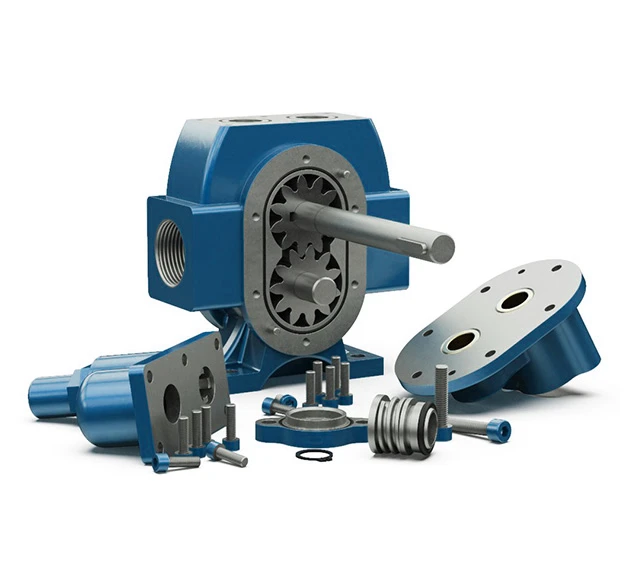
Customization may involve:
- Pump dimensions
- Gear configuration
- Housing materials
- Shaft design
- Mounting arrangements
- Inlet and outlet connections
- Sealing systems
- Operating pressure
- Displacement or flow requirements
The extent of customization depends on the manufacturer’s engineering capabilities and the technical needs of the project.
When Should You Consider a Custom Pump?
A custom gear pump may be appropriate when space limitations, unusual fluids, specialized connections, or specific performance requirements make standard models unsuitable.
For example, machinery with limited installation space may require a particular mounting configuration or compact housing. Applications involving corrosive fluids may require different materials for the housing and internal components.
Customization can also be useful when a pump must integrate with an existing machine without requiring major modifications to the surrounding system.
Benefits of OEM Manufacturing
OEM production can provide several practical benefits for equipment manufacturers and industrial system integrators.
Consistent Product Specifications
OEM manufacturing allows businesses to establish defined specifications and maintain consistency across production batches. This can be important when the same pump is installed in multiple machines or production lines.
Integration With Existing Equipment
An OEM pump can be developed around the dimensions and interfaces of the equipment in which it will be installed. This can simplify assembly and reduce the need for additional adapters or system modifications.
Production Scalability
Once the design and manufacturing process have been established, OEM production can support repeat orders. This can help equipment manufacturers maintain consistency as production volumes increase.
Benefits of Custom Manufacturing
Custom manufacturing offers greater flexibility when standard products cannot satisfy a project’s requirements.
One major benefit is the ability to select components based on the actual operating environment. Materials, seals, gears, and other components can be evaluated according to fluid properties, temperature, pressure, and expected operating conditions.
Custom designs can also address mechanical requirements that are difficult to accommodate with standard pumps.
Material Customization
Material selection is an important part of custom gear pump production. Different applications may require different levels of corrosion resistance, mechanical strength, or temperature tolerance.
Depending on the application, manufacturers may offer materials such as cast iron, stainless steel, aluminum, bronze, or specialized alloys.
Seals and gaskets should also be selected according to the fluid being handled. Compatibility is particularly important when the pump is exposed to aggressive chemicals, elevated temperatures, or unusual fluids.
Custom Gear and Housing Designs
The gear and housing design can influence pump displacement, pressure capability, efficiency, and operating characteristics. Custom manufacturing may allow these components to be adapted to specific application requirements.
However, changing one component can affect other aspects of pump performance. For this reason, customization should be based on engineering analysis rather than simply changing dimensions to fit a particular space.
A manufacturer should evaluate how proposed modifications affect clearances, strength, heat generation, and overall operation.
Custom Shaft and Mounting Options
Shaft and mounting configurations are often important when integrating a gear pump into existing machinery. The shaft may need to accommodate a particular drive system, while the mounting arrangement must align correctly with the equipment.
Custom options can include shaft dimensions, keyways, mounting patterns, connection positions, and other mechanical interfaces.
Accurate dimensional requirements are essential because small differences can create alignment problems during installation.
Custom Sealing Solutions
Sealing requirements vary according to the fluid and operating environment. Standard sealing materials may be suitable for common oils and hydraulic fluids, while more demanding applications may require specialized options.
A custom manufacturing project should consider:
- Fluid compatibility
- Operating temperature
- Pressure conditions
- Shaft speed
- Expected service life
- Environmental exposure
Selecting the correct sealing system can help reduce leakage and support reliable operation.
Technical Information Required for Custom Projects
The quality of the final product depends partly on the quality of the information provided at the beginning of the project. Buyers should prepare as much technical data as possible.
Useful information includes the fluid type, viscosity, flow rate, pressure, temperature, rotational speed, installation dimensions, connection requirements, and expected operating cycle.
Engineering drawings, existing pump specifications, photographs, and system diagrams can also help clarify integration requirements.
Prototyping and Testing
For complex OEM or custom projects, prototype evaluation can help identify potential issues before full-scale production. A prototype can be assessed under conditions that closely represent the intended application.
Testing may examine flow, pressure, leakage, temperature, vibration, noise, and operating stability. The exact testing requirements should be agreed upon during the project planning stage.
Testing is particularly useful when the customized pump will operate under demanding or unusual conditions.
Quality Control in OEM Production
Consistent quality is essential when gear pumps are produced for OEM applications. Variations between individual units can create problems when pumps are installed in standardized equipment.
Manufacturers may use controlled machining processes, dimensional inspections, assembly procedures, and final performance checks to maintain consistency.
Documentation and traceability can also be important for larger OEM programs, particularly when pumps are used in critical industrial equipment.
Balancing Customization and Cost
Customization can provide valuable technical benefits, but it may increase development costs and production complexity. Not every application requires a completely custom design.
In some cases, a standard pump with a limited modification may provide a more practical solution. Buyers should therefore compare the technical advantages of customization against development time, tooling requirements, production volume, and long-term maintenance considerations.
The most suitable solution is usually the one that meets the essential requirements without adding unnecessary complexity.
Questions to Ask an OEM or Custom Manufacturer
Before starting an OEM or custom gear pump project, buyers should discuss several important points with the manufacturer:
- Can the manufacturer work from existing drawings or specifications?
- What components can be customized?
- Which materials and sealing options are available?
- What information is required to evaluate the application?
- Can prototypes be produced before mass manufacturing?
- What testing is performed on custom products?
- How is production consistency maintained?
- Are spare parts available for the customized design?
- What documentation will be provided with the finished product?
Clear answers can help establish realistic expectations before development begins.
OEM Versus Custom: Which Option Is Better?
OEM and custom manufacturing serve different purposes. OEM production is often suitable when a company needs consistent pumps for integration into its own equipment. Custom manufacturing is more appropriate when specific technical or mechanical requirements cannot be met by an existing model.
In some projects, the two approaches overlap. A manufacturer may modify an existing pump platform to create an OEM product with selected custom features. This can reduce development time while still providing the required level of integration.
The best approach depends on the project’s technical requirements, production volume, budget, and long-term objectives.
Final Thoughts
OEM and custom gear pump manufacturing can provide greater flexibility for industrial applications that require specific performance or integration characteristics. From materials and sealing systems to gears, shafts, housings, and mounting arrangements, different aspects of a pump can potentially be adapted to meet defined requirements.
Industrial buyers should begin with clear technical specifications and work with a manufacturer capable of evaluating the complete application. By balancing customization needs with manufacturing complexity, testing requirements, cost, and long-term serviceability, businesses can develop gear pump solutions that are better suited to their equipment and operating environment.