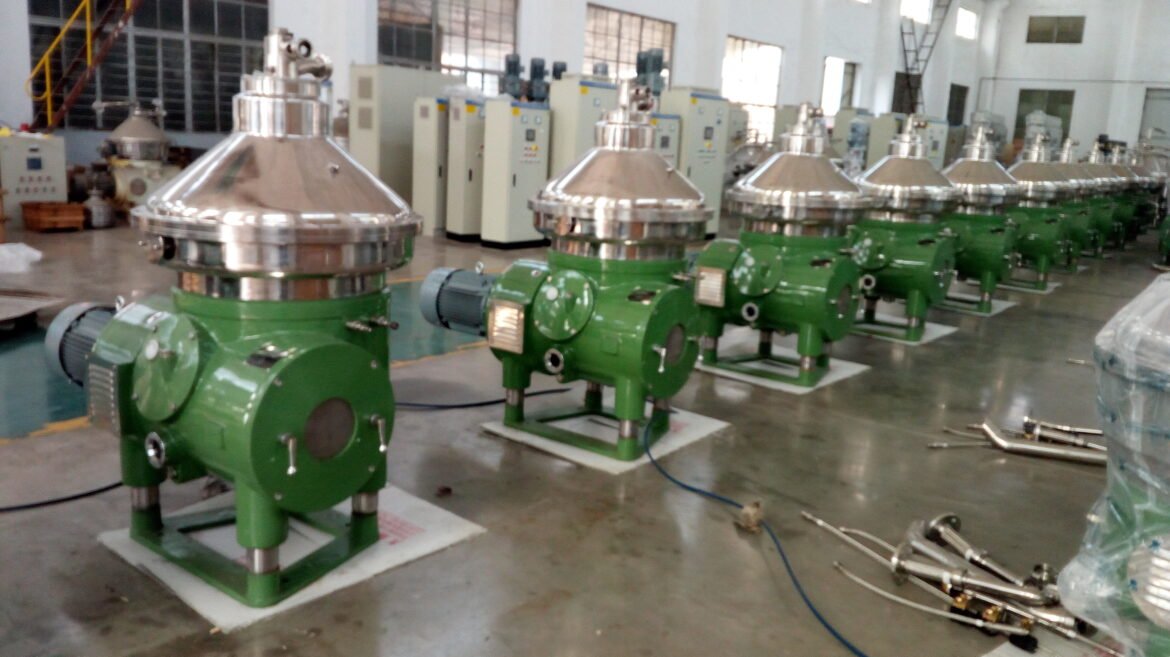
A modern disc stack centrifuge is a precision separation machine designed to separate liquids from solids or to separate two immiscible liquids according to differences in density. Its compact design allows high-speed centrifugal forces to improve separation efficiency while maintaining continuous operation.
The performance of a modern Disc Stack Centrifuge depends on the interaction of several carefully engineered components. Each part contributes to separation quality, operating stability, maintenance requirements, and overall equipment reliability. Shenzhou Machinery is one manufacturer associated with this type of separation equipment.
Bowl Assembly
The bowl is the central rotating component where centrifugal separation takes place. It operates at high speed and generates the centrifugal force required to move heavier particles or liquid phases toward different areas of the bowl.
Because the bowl is exposed to continuous rotational stress, its material, balance, surface finish, and structural design are important factors in safe and reliable operation.
Disc Stack
Inside the bowl, a series of closely spaced conical discs creates a large effective separation area within a relatively compact volume. The disc stack divides the liquid into thin layers, allowing suspended particles and liquid phases to travel shorter distances during separation.
The number, spacing, and angle of the discs can influence throughput and separation performance. Proper disc-stack design is particularly important when processing liquids with fine suspended solids.
Feed and Distribution System
The feed system introduces the process liquid into the rotating bowl and distributes it evenly across the separation zone. Uniform distribution helps prevent turbulence and ensures that the available disc surface is used effectively.
A well-designed distribution system can also reduce uneven loading inside the bowl, which supports stable operation and consistent separation results.
Centrifugal Drive System
The drive system supplies the rotational energy needed to operate the bowl at its specified speed. Depending on the machine design, it may include an electric motor, transmission components, bearings, and related control elements.
Stable rotational speed is essential because centrifugal force increases significantly as rotational speed rises. Any unwanted vibration, imbalance, or speed fluctuation can affect both performance and equipment life.
Separation Outlets
Modern centrifuges typically include dedicated outlets for separated liquid phases and, depending on the design, separated solids. These outlets allow the processed materials to leave the machine continuously.
For liquid-liquid separation, outlet arrangements help maintain the desired interface between the two liquid phases. In other applications, the design may prioritize efficient discharge of clarified liquid and accumulated solids.
Solids Discharge Mechanism
When a centrifuge is used to remove suspended solids, the solids gradually collect in the peripheral area of the bowl. Some modern designs incorporate an automated solids discharge mechanism to remove accumulated material without requiring frequent shutdowns.
The discharge cycle must be carefully controlled. Excessive or insufficient discharge can influence product recovery, solids concentration, and overall process efficiency.
Operating Control System
A modern disc stack centrifuge often incorporates electronic controls for monitoring and adjusting key operating parameters. These may include rotational speed, feed conditions, discharge intervals, temperature, vibration, and other process variables.
Automated monitoring can help operators identify abnormal operating conditions before they develop into serious mechanical or process problems.
Sealing and Bearing Components
Seals help prevent leakage and protect internal components from contamination, while bearings support the rotating assembly and maintain accurate alignment. Both are exposed to demanding operating conditions because of the high rotational speeds involved.
Regular inspection of seals, bearings, lubrication systems, and related components is therefore important for maintaining reliable operation.
Why Component Integration Matters
The individual components of a centrifuge do not work independently. Bowl geometry, disc spacing, feed distribution, drive speed, discharge behavior, and control settings all influence the final separation result.
For this reason, selecting or evaluating a centrifuge should involve more than looking at its maximum speed or processing capacity. The complete system needs to match the characteristics of the material being processed and the requirements of the application.
Conclusion
Understanding the key components of a modern disc stack centrifuge makes it easier to evaluate how the equipment achieves continuous and efficient separation. The bowl and disc stack provide the primary separation environment, while the feed system, drive mechanism, outlets, discharge system, controls, seals, and bearings support stable operation.
A properly integrated design can improve separation consistency, reduce unnecessary downtime, and provide dependable performance across a wide range of industrial applications.