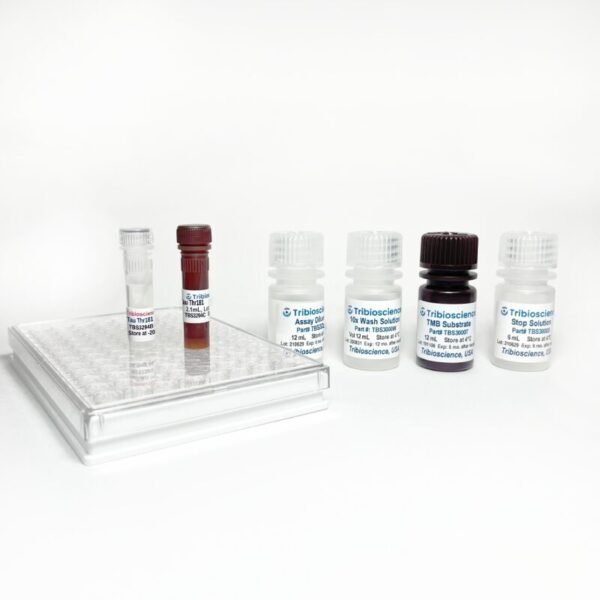
Tau biomarkers have become important research targets in the study of neurodegenerative diseases, particularly Alzheimer’s disease. Changes in tau phosphorylation, protein structure, and aggregation can provide valuable information about neurological processes associated with disease development. To investigate these changes accurately, laboratories need analytical tools that can detect specific tau forms and produce reliable measurements.
Selecting an appropriate detection kit involves more than checking whether it measures tau. Researchers should examine antibody specificity, analytical sensitivity, measurement range, sample compatibility, precision, and other technical characteristics. Reviewing the p-tau 181 kit specification is a useful starting point when evaluating whether a particular assay meets the requirements of a laboratory research project.
Understanding Tau Biomarkers in Laboratory Research
Tau is a microtubule-associated protein primarily expressed in neurons. It helps maintain microtubule stability, supporting neuronal structure and the movement of materials within nerve cells.
Under certain conditions, tau can undergo abnormal changes, including excessive phosphorylation. These modifications may affect its normal interactions with microtubules and contribute to the formation of abnormal protein aggregates.
Researchers investigate several forms of tau to understand these processes:
- Total tau (t-tau): Represents the overall amount of tau detected by a particular assay.
- Phosphorylated tau (p-tau): Refers to tau carrying phosphate groups at specific amino acid positions.
- Tau isoforms: Different molecular forms produced through alternative RNA splicing.
- Tau fragments: Protein fragments generated through biological processing or degradation.
Among these targets, p-tau181 is frequently studied because of its association with Alzheimer’s-related pathological changes.
Why Kit Specifications Matter
A detection kit’s specifications describe its analytical capabilities, intended applications, and operating requirements. Reviewing these details helps researchers determine whether the product is suitable for their experimental objectives.
An assay may be designed for one sample type but perform differently with another. Similarly, a kit with good sensitivity may not provide the required measurement range for every research application.
Evaluating specifications before purchasing or validating a kit can help laboratories:
- Match the assay to the intended biomarker.
- Confirm compatibility with available biological samples.
- Estimate whether the assay can detect expected concentrations.
- Plan sample processing and experimental workflows.
- Assess reproducibility across multiple testing runs.
- Identify potential analytical limitations.
A structured evaluation also reduces the risk of selecting a method that cannot adequately answer the research question.
1. Target Specificity and Antibody Recognition
Antibody specificity is one of the most important specifications for a tau detection kit.
Tau exists in multiple forms, and researchers may need to distinguish phosphorylated tau from non-phosphorylated tau. For p-tau181 analysis, the assay should recognize the phosphorylation site at threonine 181.
When reviewing antibody-related information, consider:
- Whether the assay is designed for total tau or a specific phosphorylated form.
- Which region or modification the antibodies recognize.
- Whether cross-reactivity with other tau forms has been evaluated.
- Whether specificity has been demonstrated using appropriate controls.
- Whether the assay has been validated for the intended sample matrix.
An assay that does not adequately distinguish its target from related proteins may produce results that are difficult to interpret.
2. Analytical Sensitivity and Detection Limits
Sensitivity describes an assay’s ability to detect low concentrations of a target biomarker.
This characteristic is particularly important when working with plasma or serum, where some neurological biomarkers may be present at relatively low levels.
Two specifications deserve particular attention:
Limit of detection (LOD): The lowest target concentration that can be distinguished from the background signal under defined conditions.
Limit of quantification (LOQ): The lowest concentration that can be measured with acceptable accuracy and precision.
These values are not interchangeable. A kit may detect a small amount of a protein without being able to quantify it reliably at that concentration.
Researchers should compare the expected sample concentrations with the kit’s validated LOD and LOQ before selecting an assay.
3. Measurement Range and Linearity
The measurement range indicates the concentrations over which an assay can provide reliable results.
If samples contain more biomarker than the upper limit allows, dilution may be necessary. If concentrations fall below the lower quantification limit, the assay may not provide dependable numerical results.
Linearity describes how closely measured values follow the expected relationship between concentration and analytical response over a specified range.
When reviewing a kit, examine:
- Lower and upper quantification limits.
- Validated linearity range.
- Recommended sample dilution factors.
- Dilution recovery data.
- Procedures for handling samples outside the measurement range.
A suitable range should cover the concentrations anticipated in the planned experiment.
4. Sample Type Compatibility
Not every tau detection kit is suitable for every biological material.
Common sample types used in neurological research include:
Cerebrospinal Fluid
Cerebrospinal fluid surrounds the brain and spinal cord. It is widely used in neurological biomarker research because it provides access to proteins associated with the central nervous system.
Plasma
Plasma is increasingly investigated for blood-based neurological biomarkers. Its accessibility makes it useful in studies involving repeated sample collection, although low biomarker concentrations can create analytical challenges.
Serum
Serum is another biological sample used in protein analysis. Its composition differs from plasma, so researchers should confirm that the selected assay has been validated for serum rather than assuming that the two sample types are interchangeable.
Cell Culture Supernatants
Experimental studies may use cultured neuronal cells or other cell models to investigate tau expression and phosphorylation under controlled conditions.
Tissue Extracts
Brain tissue and other experimental tissue samples can help researchers examine tau-related molecular changes. However, extraction procedures and matrix effects should be considered when evaluating assay compatibility.
Always check the manufacturer’s stated sample types and validation data before using a kit with a new material.
5. Assay Format and Detection Technology
The assay format determines how the target is captured, detected, and quantified.
Several technologies are commonly used for tau biomarker analysis.
Enzyme-Linked Immunosorbent Assay (ELISA)
ELISA typically uses capture and detection antibodies, with an enzyme-mediated reaction producing a measurable signal.
It is widely used because of its established workflow, compatibility with microplate readers, and suitability for processing multiple samples.
Chemiluminescence Immunoassay (CLIA)
CLIA uses a chemical reaction that generates light as the detection signal.
Depending on the assay design, it may provide sensitive measurements and support automated laboratory workflows.
Electrochemiluminescence Immunoassay (ECLIA)
ECLIA uses an electrochemical process to trigger light emission from a detection label.
Some systems support multiplex testing, allowing several biomarkers to be measured within the same sample.
Other Analytical Methods
Western blotting and mass spectrometry can complement immunoassay-based research. Western blotting provides information about protein size and molecular patterns, while mass spectrometry can help characterize specific molecular modifications.
The preferred technology depends on whether the study prioritizes routine quantification, molecular characterization, throughput, or multiplex analysis.
6. Precision and Reproducibility
Precision describes the consistency of repeated measurements. It is essential when comparing samples across experimental groups or different testing sessions.
Two common indicators are:
- Intra-assay precision: Variation among repeated measurements within the same assay run.
- Inter-assay precision: Variation between separate runs, which may occur on different days or with different reagent batches.
These characteristics are often expressed as coefficients of variation (CV).
Researchers should review the reported CV values and determine whether they are acceptable for the intended application. A study designed to identify small differences in biomarker concentrations may require particularly consistent measurements.
7. Recovery and Interference Testing
Recovery describes how accurately an assay measures a known quantity of target added to a sample.
Spike-and-recovery experiments can help evaluate whether the sample matrix affects the measured concentration.
Interference testing examines whether substances present in biological samples influence assay performance.
Potential sources of interference may include:
- Heterophilic antibodies.
- High concentrations of unrelated proteins.
- Hemolysis-related components.
- Lipids and other matrix constituents.
- Certain sample additives or contaminants.
Reviewing these validation characteristics can help researchers anticipate potential sources of inaccurate results.
8. Calibration Standards and Quality Controls
Reliable quantitative analysis requires an appropriate calibration system.
A standard curve is generated using known concentrations of the target or an appropriate reference material. The measured signal from unknown samples is then compared with this curve to estimate biomarker concentration.
When assessing kit specifications, researchers should determine:
- Whether calibration standards are included.
- The number and range of standard concentrations.
- Whether quality-control materials are supplied.
- Recommended calibration procedures.
- Criteria for accepting or rejecting an assay run.
The traceability and commutability of calibration materials may also be important when comparing results across platforms or research institutions.
9. Kit Contents and Laboratory Requirements
Practical kit details can affect experimental planning and laboratory efficiency.
Before ordering, confirm which components are included and whether additional equipment or reagents are required.
Important details include:
- Number of test wells or reactions.
- Capture and detection reagents.
- Calibration standards and controls.
- Washing and dilution buffers.
- Detection substrates.
- Required microplate reader or analyzer.
- Reagent storage conditions.
- Shelf life and expiration date.
- Preparation and incubation requirements.
Researchers should also check whether the kit is compatible with existing laboratory equipment. This helps avoid unexpected workflow changes after purchase.
10. Protocol Clarity and Technical Support
A clear protocol helps researchers perform each assay step consistently.
Instructions should explain sample preparation, reagent handling, incubation conditions, washing procedures, signal detection, and result calculation.
It is also useful to review whether the manufacturer provides:
- Detailed technical documentation.
- Validation data.
- Troubleshooting guidance.
- Information about common interferences.
- Storage and stability recommendations.
- Technical assistance for application-specific questions.
Accessible documentation is especially important when introducing a new assay into an established laboratory workflow.
Comparing Tau Detection Kits Before Selection
A comparison table can help organize product specifications and identify important differences.
| Evaluation criterion | What researchers should verify |
|---|---|
| Target | Total tau, p-tau181, or another tau form |
| Antibody specificity | Recognition of the intended molecular target |
| LOD and LOQ | Ability to detect and quantify expected concentrations |
| Measurement range | Validated lower and upper limits |
| Sample compatibility | Plasma, serum, CSF, or other materials |
| Detection technology | ELISA, CLIA, ECLIA, or another method |
| Precision | Intra-assay and inter-assay variation |
| Recovery | Accuracy in the intended sample matrix |
| Calibration | Standards and quality-control materials |
| Workflow | Equipment, sample volume, and processing time |
| Storage | Reagent stability and handling requirements |
This comparison should be based on actual manufacturer documentation rather than assumptions about performance from the assay format alone.
Common Mistakes When Choosing a Tau Biomarker Kit
Even experienced laboratories can overlook important details during assay selection.
Choosing Based on Sensitivity Alone
A low detection limit is useful, but it does not guarantee specificity, precision, or reliable quantification across the full measurement range.
Ignoring Sample Compatibility
A kit designed for cerebrospinal fluid may not be suitable for plasma or serum without additional validation.
Confusing Detection with Quantification
An assay may detect a target at low concentrations without providing accurate numerical results at those levels. Both LOD and LOQ should be considered.
Overlooking Cross-Reactivity
If the antibody system recognizes related tau forms, the measured signal may not represent the intended target alone.
Comparing Results Across Different Platforms Without Validation
Different kits may use different antibodies, standards, and signal-generation methods. Numerical results should not be assumed to be directly interchangeable.
Neglecting Reagent Storage and Handling
Improper storage, repeated reagent exposure, or inconsistent preparation can affect assay performance and reproducibility.
Establishing a Reliable Tau Biomarker Testing Workflow
Selecting an appropriate kit is only one part of a dependable analytical process. Laboratories should also establish procedures that minimize variation during sample collection, testing, and data interpretation.
A practical workflow includes:
- Define the research question and target tau form.
- Select an assay validated for the intended sample type.
- Review analytical performance and kit specifications.
- Standardize sample collection and storage.
- Follow the recommended assay protocol.
- Include appropriate calibration and quality controls.
- Evaluate precision and other validation parameters.
- Document results and relevant experimental conditions.
These steps help laboratories produce consistent measurements and improve the interpretability of their research findings.
Future Trends in Tau Biomarker Detection
Advances in analytical technology are creating new possibilities for neurological biomarker research.
Ultrasensitive immunoassays are being developed to measure low-abundance proteins more effectively. These methods may support further investigation of blood-based tau biomarkers.
Multiplex platforms are another area of interest. Measuring several neurological markers in a single sample can help researchers examine relationships between tau pathology, amyloid accumulation, neuronal injury, and inflammation.
Improvements in antibody engineering may also increase target specificity, while better reference materials and standardized validation procedures could improve comparisons between laboratories.
As these technologies develop, detailed specification reviews will remain important. Researchers will need to evaluate not only analytical performance but also how well a kit fits the intended experimental design.
Conclusion
Choosing a tau biomarker detection kit requires careful evaluation of its analytical and practical specifications. Target specificity, sensitivity, quantification limits, measurement range, sample compatibility, precision, and calibration quality all influence whether an assay is suitable for a particular research application.
For p-tau181 studies, phosphorylation-specific antibody recognition is especially important. Laboratories should also review validation data, interference testing, kit contents, and protocol requirements before making a selection.
A systematic approach to comparing specifications helps researchers avoid common assay-selection problems and establish reliable testing workflows. By matching the detection method to the research objective, laboratories can generate more consistent data and contribute to a deeper understanding of tau-related changes in neurodegenerative diseases.