Solid surface materials are widely used in modern construction, interior design, and commercial spaces because of their versatility, smooth appearance, and ability to be fabricated into different shapes. From kitchen countertops and bathroom vanities to reception desks and integrated washbasins, these materials offer practical solutions for projects that require both functionality and visual consistency. Their performance and appearance depend significantly on the manufacturing methods used during production.
Understanding how solid surface products are manufactured helps architects, contractors, distributors, and construction buyers make better purchasing decisions. The process involves several stages, including raw material selection, formulation, mixing, molding, curing, finishing, and quality inspection. Each stage contributes to the final product’s characteristics, making the manufacturing process an important consideration when evaluating a Solid Surface Manufacturer.
1. Understanding Solid Surface Materials
Solid surface is an engineered material generally produced by combining mineral fillers, resin, pigments, and other additives. The exact formulation varies depending on the product type and manufacturer’s production technology.
Common ingredients may include:
- Aluminum trihydrate (ATH) or other mineral fillers
- Acrylic or polyester-based resins
- Color pigments
- Curing agents
- Performance-enhancing additives
These ingredients are carefully selected to create a material with consistent appearance and suitable physical characteristics.
Solid surface products are available in different colors, patterns, thicknesses, and finishes. Their composition and production methods influence properties such as workability, surface appearance, and resistance to everyday wear.
2. Raw Material Selection and Inspection
The manufacturing process begins with selecting suitable raw materials. The quality of these ingredients has a direct influence on the consistency and performance of the finished product.
Mineral fillers contribute to the material’s body and surface characteristics, while resins act as binding components. Pigments provide the desired colors and decorative effects.
Before production, manufacturers may inspect materials for:
- Purity and consistency
- Particle size and distribution
- Resin quality
- Color accuracy
- Moisture content
- Storage conditions
- Supplier specifications
Incoming material inspection helps prevent unsuitable ingredients from entering the production process.
Proper storage is equally important. Certain ingredients can be affected by moisture, temperature, or contamination, so controlled storage conditions help maintain their quality.
3. Formulation and Material Proportioning
After inspection, the raw materials are measured according to a specific formulation.
The proportion of resin, mineral filler, pigments, and additives must be controlled to achieve the required material characteristics. Different product designs may require different formulations.
For example, a standard solid surface sheet and a customized molded basin may have different production requirements.
During this stage, manufacturers consider factors such as:
- Desired color and pattern
- Product thickness
- Flow and molding behavior
- Curing requirements
- Surface appearance
- Intended application
Accurate proportioning supports batch consistency and reduces the likelihood of defects caused by incorrect material ratios.
4. Mixing and Material Preparation
Once the ingredients have been measured, they are combined using suitable mixing equipment.
The objective is to distribute the mineral fillers, resin, pigments, and additives evenly throughout the mixture. Proper mixing helps produce a consistent material and reduces visible irregularities.
Depending on the manufacturing system, the process may involve:
- Introducing the resin into the mixing equipment.
- Adding mineral fillers gradually.
- Incorporating pigments and additives.
- Mixing the ingredients until the desired consistency is achieved.
- Checking the mixture for uniformity.
- Preparing the material for molding or casting.
Some production systems also use vacuum mixing to reduce trapped air. Excessive air bubbles can create voids or visible defects in the finished product, so controlling air inclusion is an important consideration.
5. Molding and Sheet Formation
After material preparation, the mixture is transferred into molds or forming equipment.
This stage determines the basic shape, dimensions, and thickness of the product. The exact method depends on the material formulation and whether the manufacturer is producing flat sheets or molded components.
For sheet production, the mixture is distributed into suitable molds or production systems to create panels with controlled dimensions.
For customized products, molds may be designed to produce specific shapes, including:
- Bathroom basins
- Kitchen sinks
- Vanity tops
- Decorative components
- Curved architectural elements
The molding process must be carefully controlled to maintain consistent thickness and minimize surface irregularities.
6. Curing and Solidification
Curing is an essential stage in solid surface manufacturing. During this process, the resin undergoes a chemical reaction that helps the material develop its solid structure.
The curing conditions depend on the resin system and production method. Manufacturers must control relevant factors such as temperature, time, and material thickness.
Proper curing helps ensure that the material develops the intended physical characteristics.
Insufficient or inconsistent curing may contribute to defects, dimensional instability, or variations in product performance. For this reason, manufacturers follow defined production parameters and monitor the curing process.
After curing, the material may require a controlled cooling period before further processing.
7. Trimming and Dimensional Processing
Once the material has solidified and cooled, it moves to the dimensional processing stage.
Manufacturers remove excess material, trim edges, and prepare sheets or molded products according to the required dimensions.
Depending on the product, this work may involve:
- Cutting large sheets into standard sizes
- Trimming uneven edges
- Drilling required openings
- Shaping corners and profiles
- Adjusting product dimensions
- Preparing components for assembly
Precision is important because dimensional inconsistencies can create difficulties during transportation, fabrication, and installation.
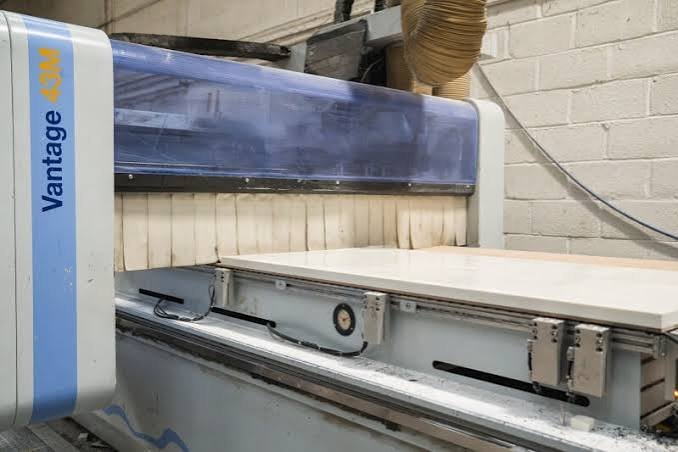
Computer-controlled cutting equipment may be used for applications that require accurate measurements and repeatable results.
8. Surface Sanding and Polishing
Surface finishing gives solid surface products their final appearance and texture.
After trimming, the material may undergo sanding to remove minor imperfections, smooth edges, and prepare the surface for the desired finish.
Manufacturers use different abrasive grades and finishing techniques depending on the product specifications.
Common surface finishes include:
- Matte finishes
- Satin finishes
- Semi-gloss finishes
- High-gloss finishes
The choice of finish depends on design preferences, application requirements, and maintenance expectations.
Polishing must be performed consistently to avoid visible differences between panels or fabricated components.
For products with integrated sinks or curved sections, finishing may require additional manual work to achieve a uniform appearance across different surfaces.
9. Creating Decorative Colors and Patterns
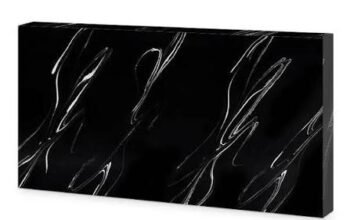
One of the important features of solid surface materials is their availability in a wide range of colors and decorative effects.
Manufacturers can use pigments and different material distribution techniques to produce solid colors, subtle patterns, stone-like appearances, and other visual designs.
Depending on the production method, decorative effects may be created through:
- Controlled pigment blending
- Multi-color material combinations
- Pattern distribution techniques
- Specialized molding processes
- Customized surface formulations
Color consistency is particularly important for projects involving multiple sheets or coordinated bathroom and kitchen components.
Manufacturers may retain approved color samples or production references to help maintain consistency across orders.
10. Fabrication of Customized Solid Surface Products
Solid surface materials can be processed into more than standard flat sheets. Their fabrication flexibility allows manufacturers and fabricators to create components for different architectural and interior applications.
Common fabrication operations include cutting, bonding, routing, thermoforming where the material formulation permits, and edge finishing.
Customized products may include:
- Kitchen countertops
- Integrated bathroom sinks
- Vanity tops
- Reception counters
- Wall cladding
- Commercial washroom fixtures
- Decorative furniture components
For certain acrylic solid surface products, controlled heating can make the material suitable for bending into curved forms. The temperature, forming equipment, and cooling procedure must be appropriate for the specific material.
Bonding is another important operation. Suitable adhesives and color-matched joint materials can help create visually continuous surfaces when components are assembled correctly.
11. Quality Inspection During Production
Quality control should take place throughout the manufacturing process rather than only after production is complete.
In-process inspection helps identify problems early and reduces the possibility of defective materials reaching the final stage.
Manufacturers may monitor:
- Raw material consistency
- Mixing accuracy
- Material distribution
- Curing conditions
- Sheet thickness
- Product dimensions
- Surface appearance
- Color uniformity
Inspection procedures should be based on documented requirements and suitable measuring methods.
When defects are identified, manufacturers may adjust production parameters, rework acceptable components, or reject materials that fail established quality criteria.
12. Final Product Testing and Evaluation
After finishing and fabrication, solid surface products may undergo additional checks to confirm that they meet the required specifications.
The tests selected depend on the material type, intended application, customer requirements, and applicable standards.
Possible evaluations include:
| Evaluation | Purpose |
|---|---|
| Dimensional inspection | Checks thickness, length, and width |
| Visual inspection | Identifies scratches, stains, and surface defects |
| Color comparison | Checks consistency with approved samples |
| Hardness testing | Evaluates resistance to indentation |
| Flexural testing | Measures behavior under bending loads |
| Chemical resistance testing | Examines response to selected substances |
| Water absorption testing | Evaluates moisture absorption under specified conditions |
Not every product undergoes every test. Buyers should request relevant reports and confirm that the testing method applies to the material being purchased.
13. Cleaning, Protection, and Packaging
After inspection, finished products are cleaned to remove dust, residue, and other contaminants.
Protective materials may then be applied to reduce the risk of scratches and damage during storage and transportation.
Packaging methods depend on product dimensions, weight, shape, and shipping requirements.
Common packaging measures include:
- Protective surface films
- Foam sheets
- Corner guards
- Reinforced cartons
- Wooden crates
- Palletized packaging
- Internal cushioning materials
Large countertops, integrated basins, and other customized components may require additional protection around edges and vulnerable sections.
Proper labeling can also help buyers identify product specifications, quantities, and handling instructions.
14. Factors That Influence Manufacturing Efficiency
Several factors affect how efficiently a solid surface manufacturing facility operates.
Equipment and automation: Modern machinery can improve production accuracy, reduce repetitive manual work, and support consistent output.
Workforce expertise: Skilled technicians are needed to manage formulation, machine operation, finishing, and customized fabrication.
Raw material availability: Reliable sourcing helps maintain production schedules and reduce unexpected interruptions.
Process monitoring: Defined production parameters help manufacturers identify variations and maintain consistency.
Maintenance practices: Regular equipment maintenance reduces breakdowns and helps prevent manufacturing defects.
Production planning: Effective scheduling allows manufacturers to manage different product types, order quantities, and delivery commitments.
Together, these factors influence manufacturing costs, product consistency, and the ability to fulfill customer requirements.
15. Environmental Considerations in Solid Surface Manufacturing
Environmental management is becoming an important part of modern manufacturing.
Solid surface production may involve energy consumption, material waste, dust generation, and chemical handling. Manufacturers can improve their environmental performance by introducing suitable management practices.
Examples include:
- Optimizing raw material usage
- Reducing production waste
- Improving energy efficiency
- Using appropriate dust extraction systems
- Managing wastewater responsibly
- Maintaining safe chemical storage
- Monitoring environmental performance
Some manufacturers may also investigate alternative materials or production methods to reduce environmental impact.
Buyers interested in sustainable construction should request relevant environmental documentation instead of relying solely on general sustainability claims.
16. Why Understanding the Manufacturing Process Matters to Buyers
Knowledge of the manufacturing process allows buyers to ask more informed questions and evaluate suppliers more effectively.
For example, understanding curing and finishing helps buyers recognize why production time and surface quality may vary. Knowing about formulation and raw material inspection also makes it easier to compare products with similar appearances but different specifications.
Before purchasing, buyers should ask manufacturers about:
- Raw material composition
- Production methods
- Available thicknesses and dimensions
- Customization capabilities
- Quality inspection procedures
- Relevant test reports
- Packaging arrangements
- Production capacity
- Delivery schedules
These questions help establish whether a supplier can meet the technical and commercial requirements of a construction project.
Conclusion
The solid surface manufacturing process involves a series of carefully managed stages, beginning with raw material selection and ending with final inspection and packaging. Formulation, mixing, molding, curing, cutting, sanding, polishing, and quality testing all contribute to the appearance and performance of the finished material.
For construction professionals and material buyers, understanding these stages provides a clearer basis for evaluating product quality and manufacturing capabilities. A supplier with suitable equipment, experienced personnel, controlled production procedures, and reliable inspection practices can help deliver materials that meet project specifications.
By looking beyond the finished appearance and examining how solid surface products are made, buyers can make more informed sourcing decisions and establish stronger relationships with manufacturing partners.